




Dr. Phil Zeltzman’s Blog
THE TRUTH ABOUT CANCER IN DOGS AND CATS: 10 COMMON MYTHS EVERY PET OWNER SHOULD KNOW ABOUT
When your veterinarian or your surgeon says the words “cancer in your pet,” time seems to stop.
Your mind races.
You’ve heard horror stories.
You think of a family member.
You wonder if treatment is truly worth it.
You worry about your pet’s quality of life.
As veterinary surgeons who have treated thousands of dogs and cats with cancer, we’ve seen firsthand how misconceptions and myths can prevent pets from getting life-saving or life-extending treatment.
Let’s clear up some of the most common myths so you can make informed decisions for your pet.
A week doesn’t go by without a conversation with a pet lover who fell into one of those traps…
Please don’t be one of them!
PET CANCER MYTH #1: A cancer diagnosis means my pet will die soon
The Reality: Not all cancers are the same, and many are highly treatable – even curable.
Just like in human medicine, “cancer” is an umbrella term for hundreds of different diseases.
Yes, some cancers are aggressive and fast-spreading.
Others are slow-growing and localized.
Some can be completely cured with surgery alone.
The key is getting an accurate and early pet cancer diagnosis.
A lump that’s been there for months or years isn’t necessarily “just a fatty tumor.”
Any new lump or growth on your dog or cat, or any growth that’s changing, should be evaluated by your family vet or a surgeon.
PET CANCER MYTH #2: Surgery will just spread the cancer
The Reality: This is one of the most harmful myths, and it’s simply not true.
We hear this constantly: “My neighbor’s dog had surgery and the cancer spread everywhere.”
Let’s be clear: cancer surgery in dogs and cats does not cause cancer to spread (when done properly of course).
What actually happens is this: sometimes when we remove a tumor surgically, it is impossible to prove spreading (aka metastasis) before surgery, because it was too small to detect at that time.
The surgery didn’t cause the spreading.
It was already there, but we could not prove it.
For many cancers, surgery is the only chance for a cure.
Removing a tumor completely before it has a chance to spread can save your pet’s life.
The goal of cancer surgery is to achieve “clean margins” – i.e. removing the tumor along with a rim of healthy tissue around it to ensure we got all the cancer cells.
Sometimes this means removing more tissue than you might expect, but that’s because we want to give your pet the best possible outcome.
PET CANCER MYTH #3: My pet is too old for cancer surgery
The Reality: Age is not a disease.
What matters is overall health, not the numbers on the calendar.
We’ve performed cancer surgeries on 14, 15 and 16-year-old pets who recovered beautifully, and we’ve recommended against surgery for 6-year-old dogs with cancer that was ignored for too long.
It’s not about age—it’s about:
- Overall health status
- Heart and lung function
- Kidney and liver function
- Ability to handle anesthesia
- Expected quality of life after surgery
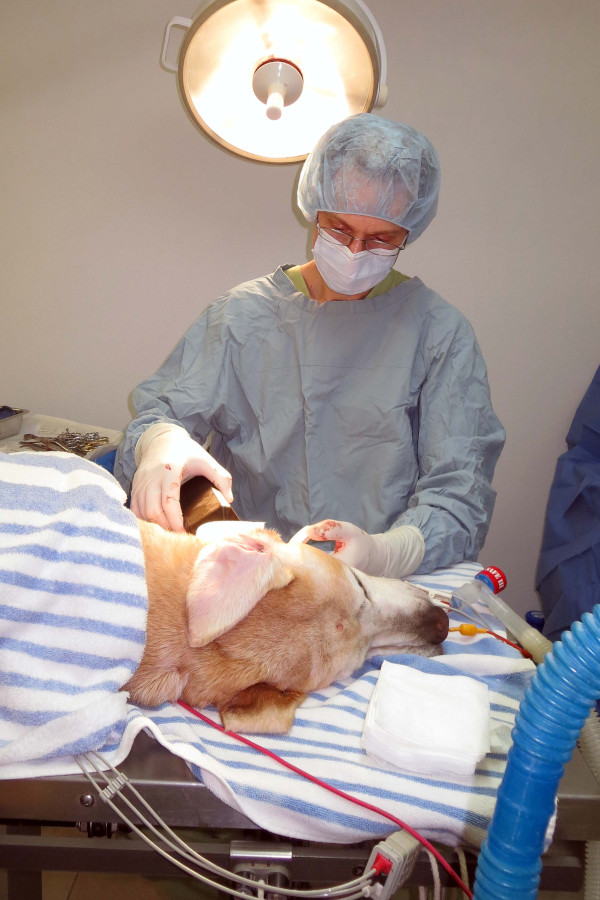
Modern veterinary anesthesia is incredibly safe for dogs and cats.
We tailor anesthetic protocols to each individual patient, and we monitor pets constantly during surgery (heart rate, blood pressure, oxygen levels, temperature, CO2, and more).
Don’t let age alone prevent you from exploring treatment options.
A healthy 12-year-old dog who has a curable tumor removed could have 2-4 more wonderful years with you.
PET CANCER MYTH #4: Chemotherapy will make my pet miserable
The Reality: do dogs and cats tolerate chemotherapy?Pets tolerate chemotherapy better than humans do.
When most people think of chemotherapy, they picture hair loss, severe nausea, and debilitating side effects.
But here’s what’s different in veterinary medicine:
- We use lower doses. Our goal isn’t to cure cancer at all costs (i.e. quantity of life) – it’s to extend quality of life.
- We use gentler protocols that cause fewer side effects.
- Pets typically don’t lose their hair (except in rare cases with certain breeds).
- Pets don’t have psychological issues. They don’t know they’re sick. They don’t anticipate feeling bad. They don’t experience the psychological distress that humans often do.
Side effects are usually mild. The most common side effects are:
- Mild digestive upset (usually managed with medication)
- Temporary decrease in appetite
- Mild fatigue for a day or two after treatment.
- Nothing dramatic in most patients.
Most pets receiving chemotherapy continue to eat, play, and enjoy life.
In fact, many owners tell their oncologist, “I can’t even tell (s)he’s getting chemo!”
Your oncologist will or should go over the most common side-effects so you are fully informed.
One last very important point: nobody will force you to choose chemo (or radiation for that matter, another option to treat some cancers)!
Your surgeon or oncologist will only recommend it if it’s been shown to make a difference.
It all depends on the type of tumor.

PET CANCER MYTH #5: If the lump isn’t bothering my pet, I should just leave it alone
The Reality: By the time a tumor “bothers” your pet, it will be much harder (and invasive) (and costly) to treat.
Cancer doesn’t hurt in the early stages.
A small, removable tumor doesn’t cause pain.
That’s why a diagnosis of cancer is sometimes delayed.
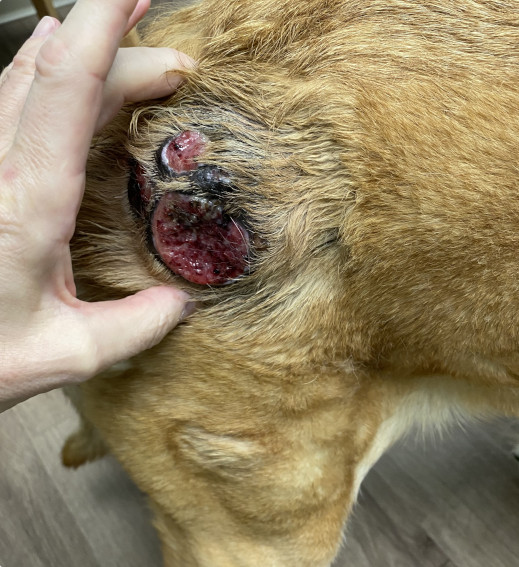
But if you wait until it’s ulcerated, infected, bleeding, stretching the skin, or interfering with movement, the surgery becomes much more complicated and invasive – and the cancer may have already spread.
Early detection and early treatment offer the best outcomes.
If you notice a lump on your dog or cat, don’t panic, but don’t ignore it.
Have your family vet or ask for a referral to a surgeon to examine the mass.
Remember: Not every lump is cancer, but every lump should be checked.
PET CANCER MYTH #6: Cancer treatment is always expensive and not worth it
The Reality: Treatment costs vary widely, from a simple pill to injections. Many options are more affordable than you think.
Yes, some cancer treatments – especially with a board-certified surgeon – can be more expensive than with your family vet.
But there is a reason your family vet might recommend a surgeon, depending on the complexity of the surgery.
You don’t have to do everything.
You can choose surgery without chemotherapy, or palliative care without aggressive treatment.
What matters is making the choice that’s right for you, your family and your pet.
My favorite tool against difficult financial decisions: pet insurance for cancer treatment.
Some include cancer treatment, some have it as an option.
Pet insurance can save your pet’s life.
PET CANCER MYTH #7: Amputating a leg is cruel
The Reality: most dogs and cats adapt to having 3 legs remarkably well – and it can save their life.
This is a conversation we have with 99% of pet owners whose pet needs an amputation.
You just cannot help but think of yourself hoping on 1 leg for the rest of your life.
But that’s just it.
Pets don’t hop on 1 leg, they can walk, run, jump, and play on 3 legs!
Bone cancer in dogs (osteosarcoma) is one of the most common reasons for limb amputation.
And we understand why the idea seems devastating.
Pets don’t have the same emotional attachment to having 4 legs that we do.
They don’t even know how many legs they have!
They live in the moment.
They don’t mourn the loss of a leg – they’re just relieved the pain is gone.
Most pets are walking within hours of surgery – we see it all the time, as hard as it is to believe.
Within weeks, they’re running, playing, and acting like nothing happened.
We’ve seen 3 legged dogs hike, swim, and even do agility courses.
Living with bone cancer pain, and the risk of breaking the weakened bone, is far more cruel than living with 3 legs.
If amputation can give your dog or your cat more comfortable, happy years (especially with chemotherapy), that’s a gift.
PET CANCER MYTH #8: Natural or holistic treatments can cure cancer without surgery or chemo
The Reality: there is no scientific evidence that holistic or natural treatments alone can cure cancer in dogs or cats.
If they did, we would know.
We’re all for integrative approaches, such as:
- A diet change to an “anti-cancer” food
- Supplements that support immune function
- Acupuncture for pain management
- CBD for comfort (where legal and vet-recommended).
These can be wonderful complementary options that improve quality of life.
But they are not replacements for proven treatments like surgery, chemotherapy, or radiation.
Delaying effective treatment to try unproven therapies can allow cancer to progress to a point where it’s no longer treatable.
If you’re interested in holistic approaches, work with a vet who can integrate them safely alongside scientifically proven treatments.
PET CANCER MYTH #9: I would know if my pet were suffering
The Reality: Pets are masters at hiding pain and sickness.
Remember, if an animal acts sick in the Wild, they get eaten.
Dogs and cats are hardwired to mask weakness – it’s a survival instinct.
Your pet might still wag their tail, eat, and greet you at the door even while dealing with significant discomfort.
This is why regular veterinary exams are crucial for early cancer detection in dogs and cats, especially as they age.
Your vet can detect subtle signs of cancer such as:
- Weight loss
- Changes in muscle mass
- Enlarged lymph nodes
- Pale gums
- Lumps and bumps.
Annual exams for younger pets, and twice-yearly exams for senior pets (7+ years for large dogs, 10+ for small dogs and cats), give us the best chance of catching cancer early.
PET CANCER MYTH #10: My friend told me I should not treat my pet
The reality: always seek professional veterinary advice for pet cancer decisions.
Of course there are multiple variations: “my neighbor said”, “my colleague thinks”, “a family member told me”…
People have all kinds of ideas about all kinds of topics.
The last people you should get advice from is people who don’t have pets (or don’t like them!!!).
They simply cannot understand the bond and the love you have for your pet.
And the worst place to get advice is most online forums, where anybody with a keyboard will be happy to share their opinion, seemingly for free, but sometimes at a great cost to your pet.

BONUS PET CANCER MYTH #11: A good vet can tell if this is cancer or not
The reality: vets are not magicians.
We can have an impression.
We can even have a conviction.
But there is simply no way to confirm cancer in a dog or cat without diagnostics such as cytology or biopsy reviewed by a veterinary pathologist looking through a microscope.
We remove “benign” masses that turn out to be cancer, and “cancerous” masses that end up being benign all the time.
With all due respect to our colleagues, to this day, we have never ever met anybody with microscopic vision.
The only way to come up with the correct diagnosis is to look at actual cells under a microscope.

THE BOTTOM LINE: WHAT EVERY PET OWNER SHOULD KNOW ABOUT CANCER IN DOGS AND CATS
Cancer in pets is not an automatic death sentence.
Many cancers are treatable.
Some are curable.
And even when a cure isn’t possible, we have more tools than ever to extend quality of life and keep pets comfortable.
SIGNS OF CANCER IN PETS EVERY OWNER SHOULD WATCH FOR
Tips to remember:
- A loss of appetite is not normal
- Difficulty eating, chewing, or swallowing is not normal
- Bleeding is not normal
- Suffocating is not normal
- Limping is not normal
- Difficulty urinating or defecating is not normal
- Check your pet regularly for lumps, bumps, or changes
- Unintentional weight loss should be a cause for concern
- Notify your vet of any wound that just won’t heal
- Don’t wait. Have new lumps evaluated promptly
- Ask questions. Your vet wants to help you understand your options
- Age is not a barrier to treatment if your pet is otherwise healthy
- Surgery does not spread cancer – it often cures it
- Chemotherapy in pets is gentler than you think
- You have options at every budget level
- Quality of life matters more than quantity, and we can help you navigate that balance
10 IMPORTANT QUESTIONS TO ASK YOUR VETERINARIAN IF YOUR DOG OR CAT MAY HAVE CANCER
- What type of cancer is it, and how aggressive is it?
- Has it spread, or is it localized?
- What are my treatment options (surgery, chemo, radiation, palliative care)?
- What’s the goal of treatment – a cure or extending quality time?
- What’s the expected outcome with and without treatment?
- What will my pet’s quality of life be like during and after treatment?
- Do you know a surgeon and/or an oncologist you trust?
- How much time do I have to make a decision?
- What signs should I watch for that mean something has changed – and when should I get help?
- How do I know if my dog or cat is in pain from cancer?
Searching for answers about cancer in your dog or cat can feel overwhelming, but early detection, accurate diagnosis, and the right treatment plan can make a life-changing difference for your pet.
Cancer is scary.
Armed with accurate information, you can make decisions with confidence, give your pet the best possible care, and cherish whatever time you have together.
As we always say, “we would rather have 6 months of happiness, than 6 years of misery.”
Your pet is lucky to have an owner who cares enough to learn the facts.
And whatever you decide, know that you’re doing your best for the friend who has given you so much.
Ultimately, only you can make the decision.
We firmly believe that the best decision you can make is by working as a unified healthcare team, with your family vet and your surgeon.
If you would like to learn how we can help your pet with safe surgery and anesthesia, please contact us through www.DrPhilZeltzman.com
Never miss a blog by subscribing here: www.DrPhilZeltzman.com/blog
Phil Zeltzman, DVM, DACVS, CVJ, Fear Free Certified
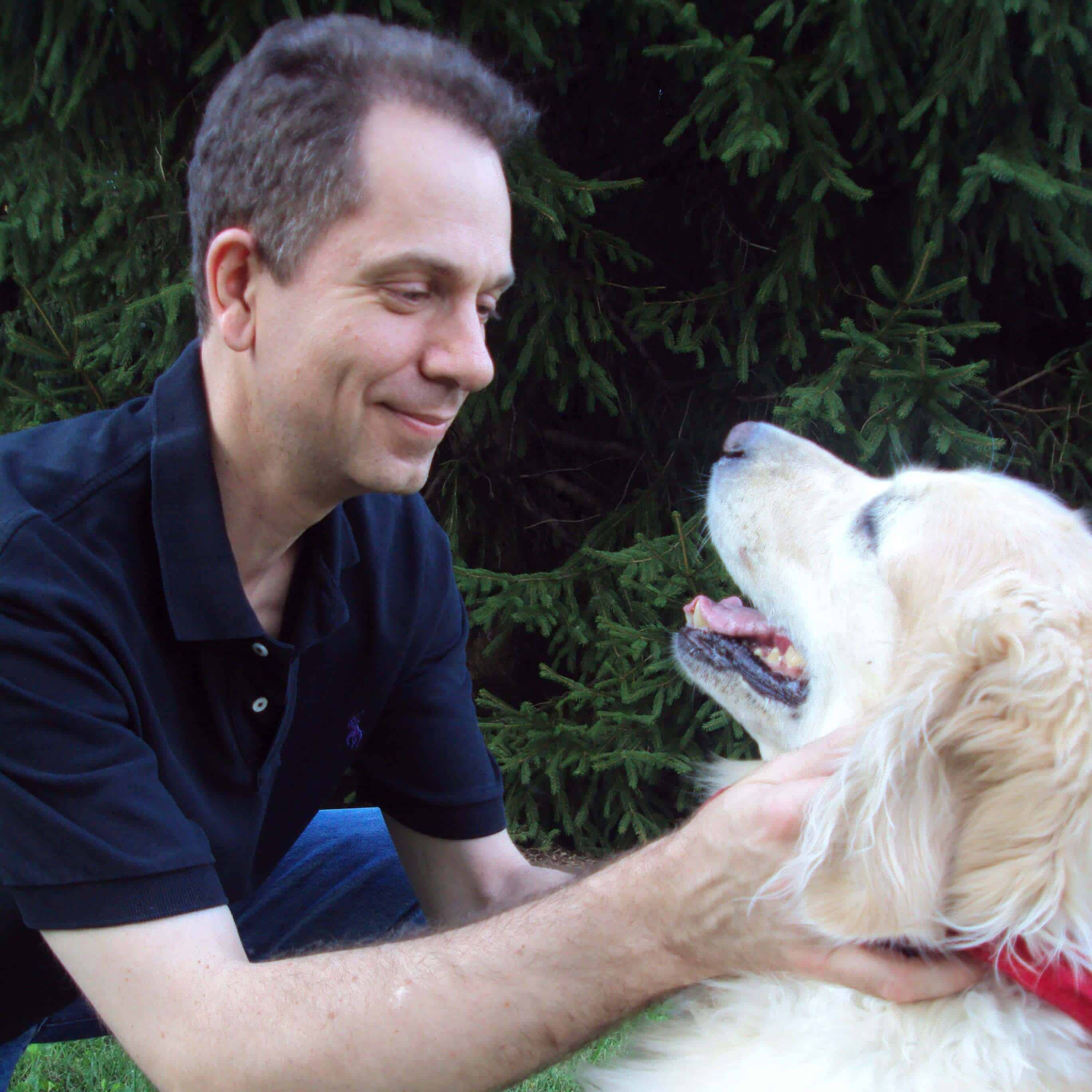
Dr. Phil Zeltzman is a traveling veterinary surgeon in Pennsylvania & New Jersey. An award-winning author, he loves to share his adventures in practice along with information about vet medicine and surgery that can really help your pets. Dr. Zeltzman specializes in orthopedic, neurologic, cancer, and soft tissue surgeries for dogs, cats, and small exotics. By working with local family vets, he offers the best surgical care, safest anesthesia, and utmost pain management to all his patients. Sign up to get an email when he updates his blog, and follow him on Facebook, too!