



Dr. Phil Zeltzman’s Blog
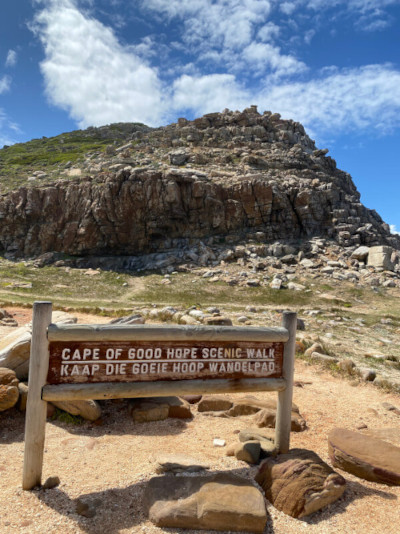
Notes from a physical therapy conference in South Africa
I was very fortunate to attend the 12th Symposium for the International Association of Veterinary Rehabilitation and Physical Therapy (IAVRPT) in Cape Town, in South Africa.
Below are some notes that can be of interest to pet lovers.
I will also intersperse a few nice pictures, with a caption.
It was an amazing conference, with over 200 people, from all over the world, who dedicate their lives to physical therapy and rehab in pets.
What is a force plate?
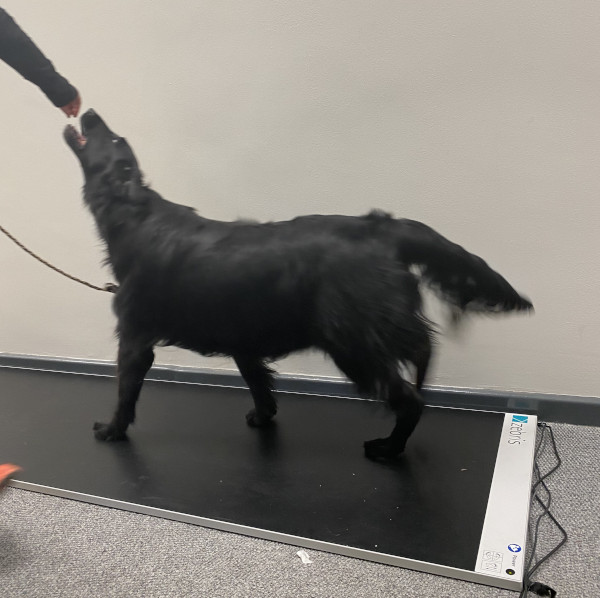
I attended a day of “lab” work centered around the use of a force plate.
A force plate is a sensitive platform embedded in a walkway, that objectively measures the weight a patient places on each leg, in order to diagnose subtle lameness and track their progress during rehab.
Vets (mostly surgeons) have said for years that the weight distribution is not 50-50 between the front and back legs. We’ve said it’s 60% in the front, because the front legs “carry” the head, the neck and the chest. And the back legs mostly “carry” the belly, so that’s only 40% of the weight.
Force plate analysis shows that this is a generalization. We just can’t compare the body shape of a mini Doxie, a Bassett hound and a mastiff.
This is important when we talk about the impact of weight loss and leg amputation.
Weight loss benefits the entire body, and now you understand why it helps the front legs even more, since they “carry” more weight.
The speaker, a physical therapist, also explained that seemingly minor things can change the results of force plate analysis: the position of the pet’s head, a wagging tail, turning the head to get a treat, pulling on the leash, wearing a neck collar rather than a harness, etc.
Bottom line: a force plate is very helpful to diagnose a difficult lameness, and we have a lot more to learn!
How to best treat arthritis pain?
I loved a lecture presented by a surgeon, who reminded us that the source of pain in a patient with arthritis is the LINING of the joint.
Therefore, treatments should target the lining of the joint.
We’ve started to inject various products and medications in our patients’ joints, with excellent results.
We started years ago with:
- stem cells
- PRP (Platelet Rich Plasma), both of which you may have heard of in people.
Now, we also inject:
- collagen (Spryng®)
- steroids (cortisone)
- hyaluronic acid etc.
The results have been very impressive, including in “desperate” cases where nothing else had helped the patient.

When should we use modern arthritis drugs?
Another physical therapist reminded the audience of something surgeons know all-too-well. The newer anti-arthritis medications like Librela® and Solencia® should not be used when a joint is instable. To avoid potentially devastating side-effects, surgery should be recommended first in these patients, specifically to stabilize the joint.
In addition, these drugs should NOT be combined with Non-Steroidal Anti-Inflammatory drugs (NSAIDs), again for fear of potentially disastrous side-effects.
So remember, our current understanding is that there are at least 2 situations when Librela® and Solencia® should not be used:
- with an unstable joint
- with an NSAID
If you would like to learn how we can help your pet with safe surgery and anesthesia, please contact us through www.DrPhilZeltzman.com
Never miss a blog by subscribing here: www.DrPhilZeltzman.com/blog
Phil Zeltzman, DVM, DACVS, CVJ, Fear Free Certified
Dr. Phil Zeltzman is a traveling veterinary surgeon in Pennsylvania & New Jersey. An award-winning author, he loves to share his adventures in practice along with information about vet medicine and surgery that can really help your pets. Dr. Zeltzman specializes in orthopedic, neurologic, cancer, and soft tissue surgeries for dogs, cats, and small exotics. By working with local family vets, he offers the best surgical care, safest anesthesia, and utmost pain management to all his patients. Sign up to get an email when he updates his blog, and follow him on Facebook, too!
Fascinating Monkeys in South Africa and Zimbabwe
| I was very fortunate to recently visit South Africa and Zimbabwe after a veterinary conference. Since 100% of the pet owners we meet are animal lovers, I thought I would share some information and pictures about his incredible trip. |
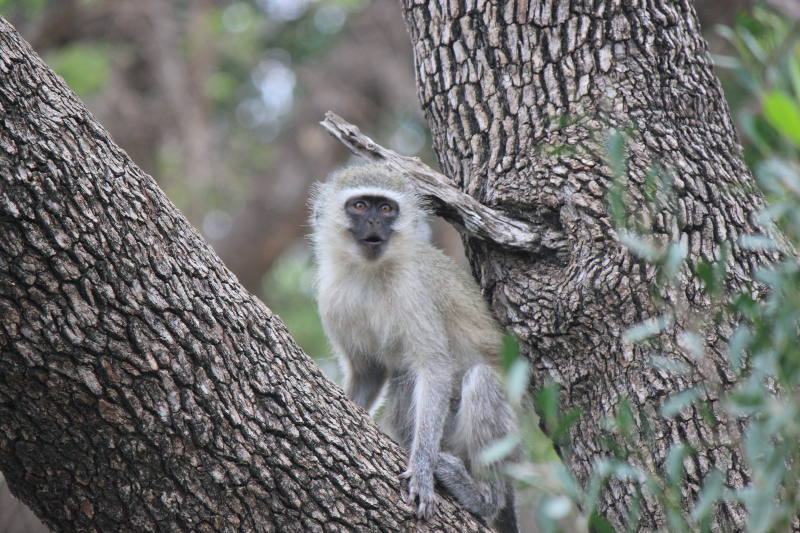
When traveling through southern Africa, it’s impossible to miss the lively antics of monkeys.
We mostly observed 2 species: vervet monkeys and baboons.
These primates are not only fascinating from a scientific perspective, but their bold behavior provides unforgettable moments for visitors – sometimes a bit scary!
Here’s a look at these cheeky creatures and my personal encounters with them.
Vervet Monkeys in South Africa
Vervet monkeys may not be the most well-known monkeys, but they are found across sub-Saharan Africa.
They are small monkeys, weighing only 6 to 11 lbs (3 to 5 kg).
For comparison, that’s the weight of a Yorkie or a mini Doxie.
They have distinctive, cute, black faces framed by white fur and long tails that help with their agile movements.
These monkeys are highly social, living in troops that can range from a few individuals to over 50.
Their diet is omnivorous, meaning they eat a bit of everything, including fruits, flowers, insects, and sometimes small animals.
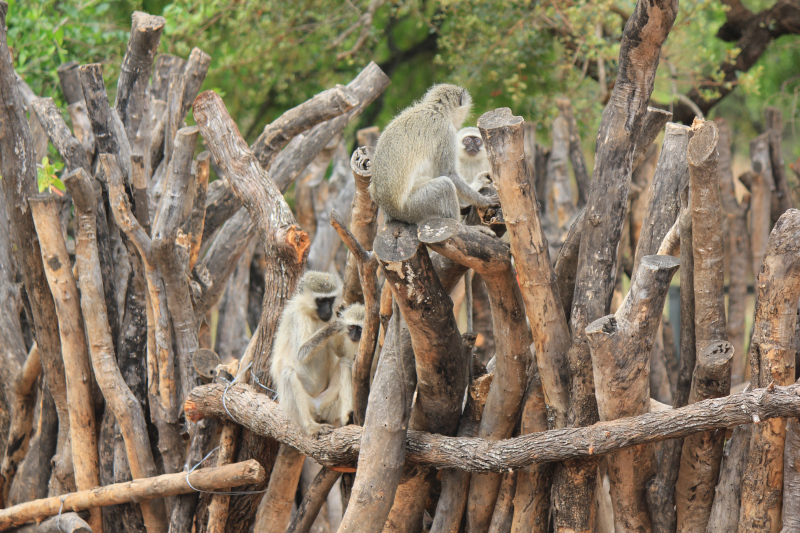
Adorable Vervet Babies
Vervet monkey babies are adorable, with their tiny black faces and inquisitive eyes.
These shy little ones are often seen clinging tightly to their mothers’ bellies as the moms move gracefully through trees.
As they grow, they begin to explore their surroundings cautiously, staying close to their protective mothers.
The sight of a vervet mother tenderly grooming her baby is a heartwarming reminder of the strong bonds within these social groups.
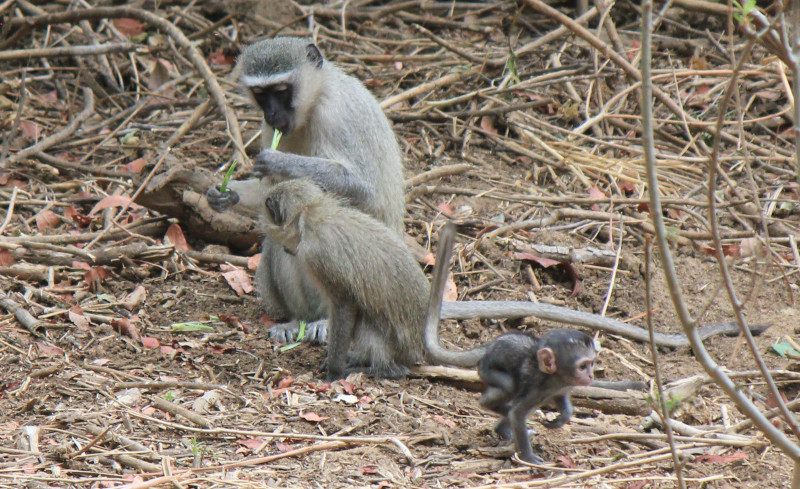
A Bold Encounter
During lunch in South Africa, I witnessed just how bold vervet monkeys can be.
A guest was enjoying his meal when, in the blink of an eye, a vervet jumped onto the table and grabbed a piece of chicken.
The guest’s surprised scream was met with the monkey’s triumphant retreat to a nearby tree, where she enjoyed her stolen snack.
I apologize for the blurry pictures, but it’s a miracle I was able to get shots from the encounter, which lasted a split second!
And during this entire scene – her baby clung to her belly!
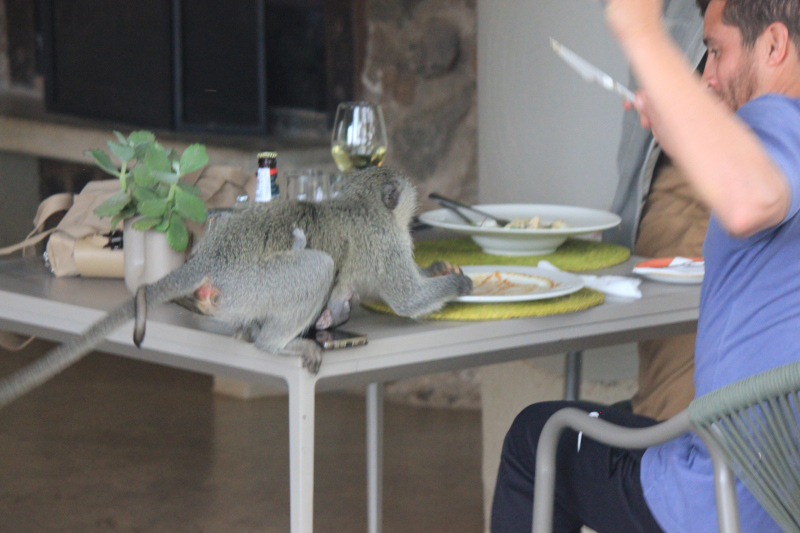
Baboons in Zimbabwe
Baboons are much bigger monkeys. They are among the largest primates in Africa.
Male typically weigh 44 to 88 lbs (20 to 40 kg), so between a Border Collie and a Lab.
Females average 22 to 33 lbs (10 to 15 kg), same as a Cocker or a Beagle.
These primates live in complex social structures and display remarkable intelligence, including tool use and problem-solving skills.
Their diet is even more varied than that of vervet monkeys, ranging from plants to small mammals.
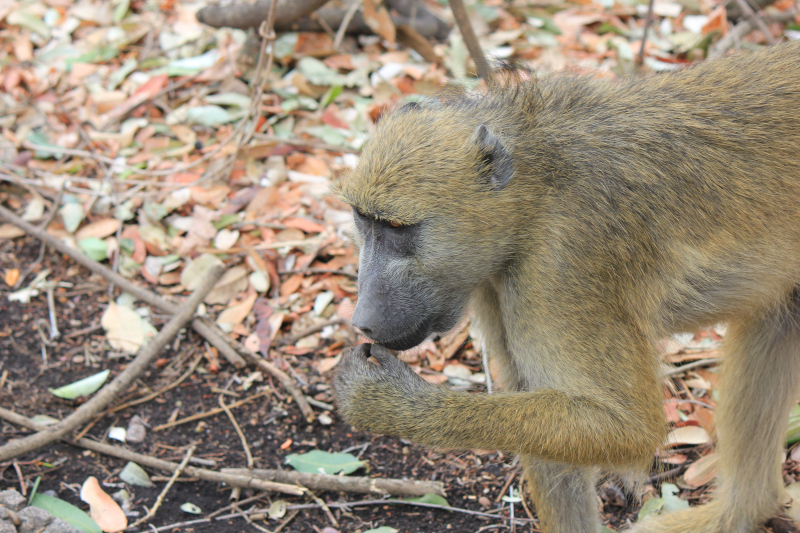
Close Call with a Baboon
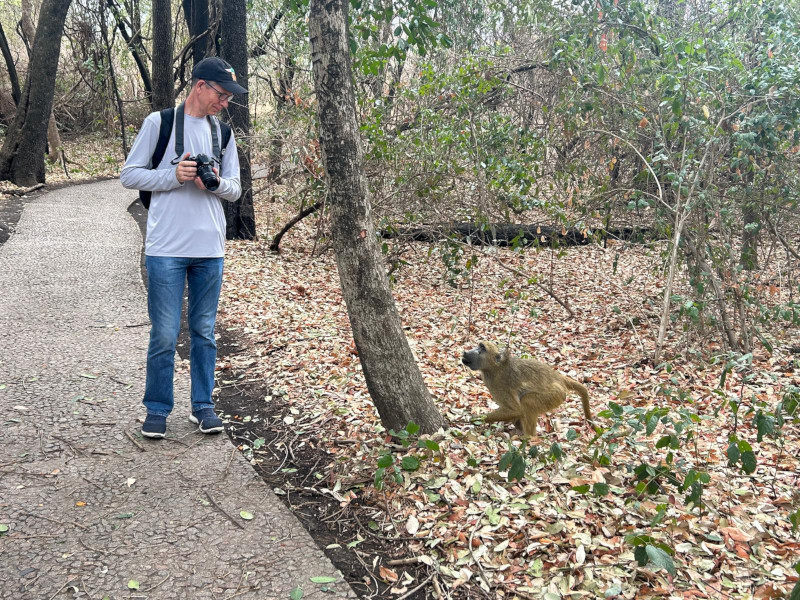
One afternoon in Zimbabwe, while visiting the impressive Victoria Falls, I found myself a little too close to a baboon for comfort.
It certainly wasn’t intentional. We simply stumbled across a group crossing the path…
We stopped and observed, respectfully, with complete admiration since it was by far the closest encounter, and the biggest group.
They kept moving around us, looking for food on the ground.
At one point, a large male sat just a few feet away.
I froze (OK, OK, aside from taking 348 pictures of him!).
For a heart-stopping moment, I thought he might leap toward me.
Instead, he jumped into a tree with effortless grace.
While baboons can be intimidating due to their size and sharp canines, they generally avoid conflict with humans unless provoked or seeking food.
The canines of a male are easily the size of those of a German shepherd or a Rottie!
Why Are Monkeys So Bold?
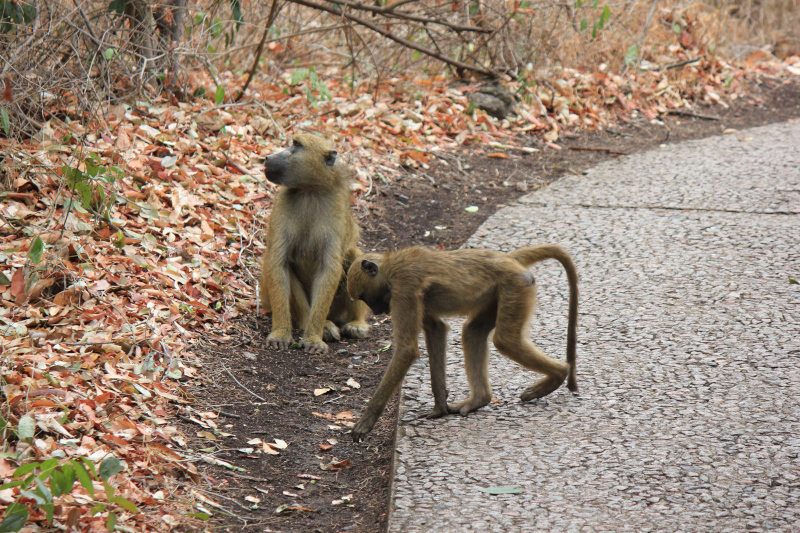
Since we invaded their territory, these monkeys have adapted to human presence, often frequenting tourist spots where they’ve learned that food is very easy to come by.
Both vervet monkeys and baboons have adapted to living alongside humans.
In many areas, their natural habitats overlap with villages, towns, and tourist hotspots.
They’ve learned that humans often mean easy access to food, whether it’s from unattended picnics, restaurant tables, or open car windows.
Their boldness is a testament to their intelligence and adaptability, but it’s also a reminder of the challenges of human-wildlife coexistence.
A Word of Caution
While vervet monkeys and baboons might seem amusing or endearing, it’s important to treat them with respect.
Feeding them or leaving food accessible can encourage aggressive behavior and disrupt their natural foraging habits.
Observing these animals from a safe distance ensures both your safety and their well-being.
Final Thoughts
From the cheeky vervet monkey who stole a restaurant guest’s chicken dinner to the imposing baboon that startled me in the Wild, these primates leave a lasting impression.
Their boldness adds a unique charm to encounters with Africa’s wildlife, blending humor and awe.
Just remember to protect your snacks – and keep your distance!
We can’t help your baboon, but if you would like to learn how we can help your cat or your dog with safe surgery and anesthesia, please contact us through www.DrPhilZeltzman.com
Never miss a blog by subscribing here: www.DrPhilZeltzman.com/blog
Phil Zeltzman, DVM, DACVS, CVJ, Fear Free Certified
Dr. Phil Zeltzman is a traveling veterinary surgeon in Pennsylvania & New Jersey. An award-winning author, he loves to share his adventures in practice along with information about vet medicine and surgery that can really help your pets. Dr. Zeltzman specializes in orthopedic, neurologic, cancer, and soft tissue surgeries for dogs, cats, and small exotics. By working with local family vets, he offers the best surgical care, safest anesthesia, and utmost pain management to all his patients. Sign up to get an email when he updates his blog, and follow him on Facebook, too!
A Lion’s Breakfast
| I was very fortunate to recently visit South Africa and Zimbabwe after a veterinary conference. Since 100% of the pet owners we meet are animal lovers, I thought I would share some information and pictures about his incredible trip. |
Malema’s skills as a tracker were hard to comprehend.
He seemed to read Nature, animal tracks and broken branches like an open book.
(please be aware that some pictures and the description are not for the faint of heart…)
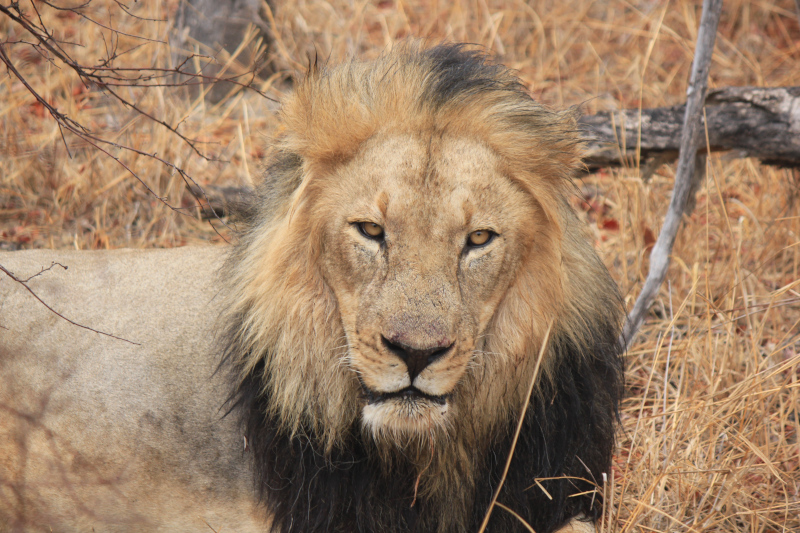
Despite the density of the bush, somehow, Malema spotted the carcass of a wildebeest, and next to him, a resting lion.

It seemed like the lion just had breakfast.
And like a house cat, he was now taking a nap.
The wildebeest – a large African antelope – served as a vivid reminder of the circle of life, hidden in a bush near the lion.
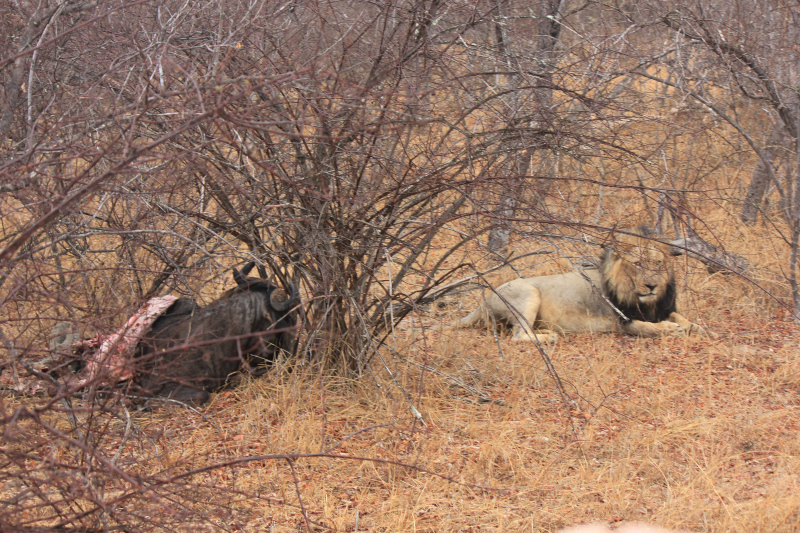
The lion, seemingly oblivious to our presence, let out a low, rumbling purr, a contented sigh after a successful hunt.
We were mesmerized, a few feet away from this apex predator, witnessing a raw, intimate moment in the wild.
Malema whispered that this was a rare opportunity.
Lions often rest after a large meal, becoming lethargic and less wary of their surroundings.
We sat in awestruck silence.
The only sound was the lion’s gentle breathing and purring.
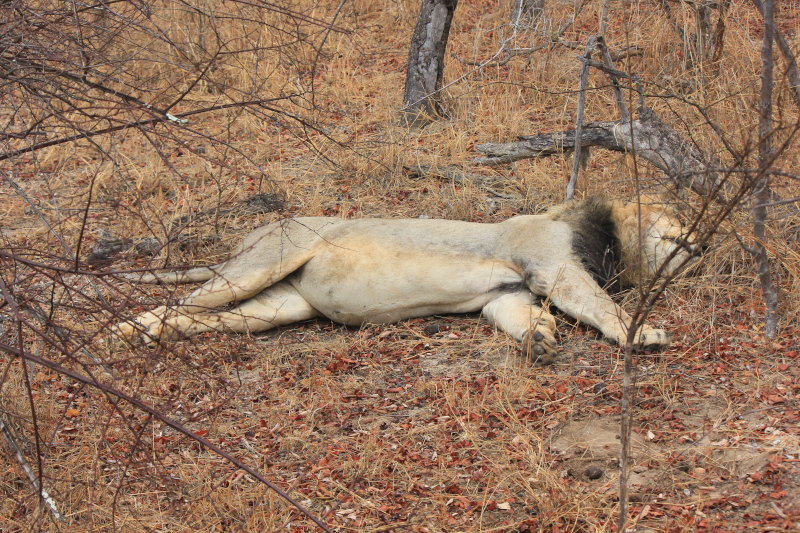
As we slowly backed away, leaving the lion to his nap, a profound sense of humility washed over us.
This was a reminder of the delicate balance of nature, the intricate web of life and death that unfolds in the African savanna.
We had witnessed a fleeting glimpse into the lion’s world, an experience that would forever be etched in our memories.
We can’t help your lion, but if you would like to learn how we can help your cat or your dog with anesthesia and surgery, please contact us through www.DrPhilZeltzman.com
Never miss a blog by subscribing here: www.DrPhilZeltzman.com/blog
Phil Zeltzman, DVM, DACVS, CVJ, Fear Free Certified
Dr. Phil Zeltzman is a traveling veterinary surgeon in Pennsylvania & New Jersey. An award-winning author, he loves to share his adventures in practice along with information about vet medicine and surgery that can really help your pets. Dr. Zeltzman specializes in orthopedic, neurologic, cancer, and soft tissue surgeries for dogs, cats, and small exotics. By working with local family vets, he offers the best surgical care, safest anesthesia, and utmost pain management to all his patients. Sign up to get an email when he updates his blog, and follow him on Facebook, too!
The Devastating Impact of Poaching in South Africa and Zimbabwe
I was very fortunate to recently visit South Africa and Zimbabwe after a veterinary conference. Since 100% of the pet owners we meet are animal lovers, I thought I would share some information and pictures about his incredible trip.

Poaching remains one of the most critical threats to wildlife across the globe.
South Africa and Zimbabwe are two countries where the illegal hunting and capturing of wild animals are especially severe.
From rhinos to elephants, countless animals are suffering, and some are disappearing, due to illegal hunting, killing, and capturing.
Let’s explore the various types of poaching, the reasons behind them, their devastating effects on animal populations, and the actions being taken to combat them.
By better understanding the urgency of the situation, we can all become part of the solution.
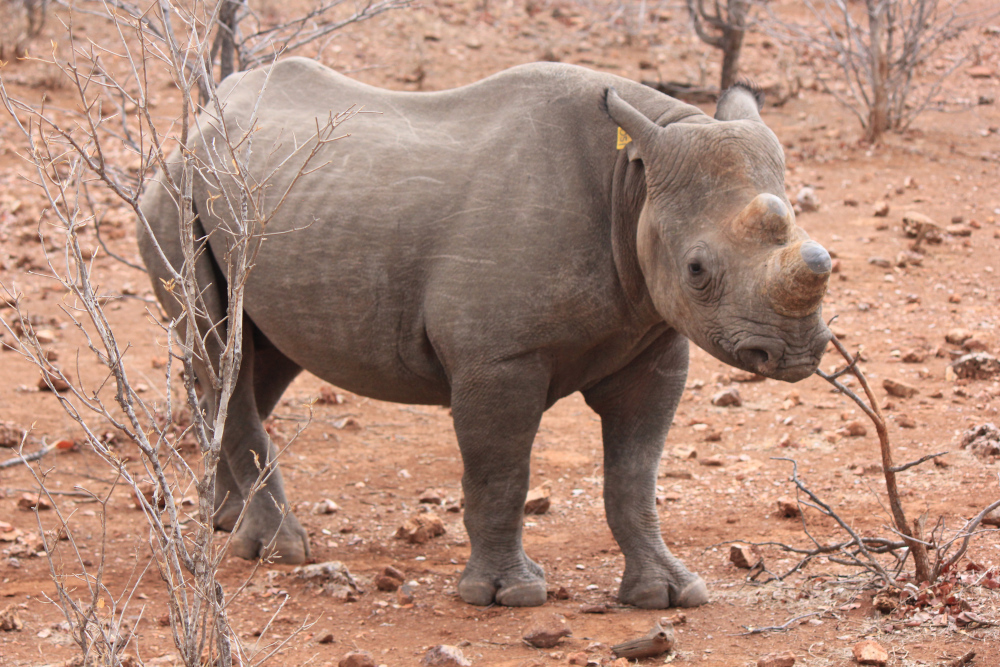
What are the different types of poaching?
Poaching isn’t a one-size-fits-all threat.
It occurs in various forms, each with its unique impact on wildlife:
1. Killing for horns & tusks: commercial poaching is the most notorious form of poaching.
It’s the illegal hunting of elephants and rhinos for their ivory tusks and horns, respectively.
These animals are killed brutally for their valuable body parts, which are then sold on the black market.
Rhino horns, for example, are prized in traditional medicine, especially in some Asian countries, despite having no proven medicinal benefits.
Why? Because the horn of a rhino is made of keratin. Keratin is the same protein that makes up human fingernails and hair.
So someone truly interested in the “medicinal” benefits of rhino horns could save a bundle – and lives – by eating their hair and biting their nails…
Rhino horns can fetch prices as high as $27,000 to $45,000 per pound ($60,000 to $100,000 per kg) on the black market.
When you know that a single horn can weigh 2.2 to 6.6 pounds (1-3 kg), you understand that this is life-changing money.
It gets even better (or worse): most rhinos have 2 horns, which doubles the bounty!
Bottom line: rhino horns are one of the most valuable substances on earth.
Below is the picture of the rhino’s skull that has been dehorned illegally.
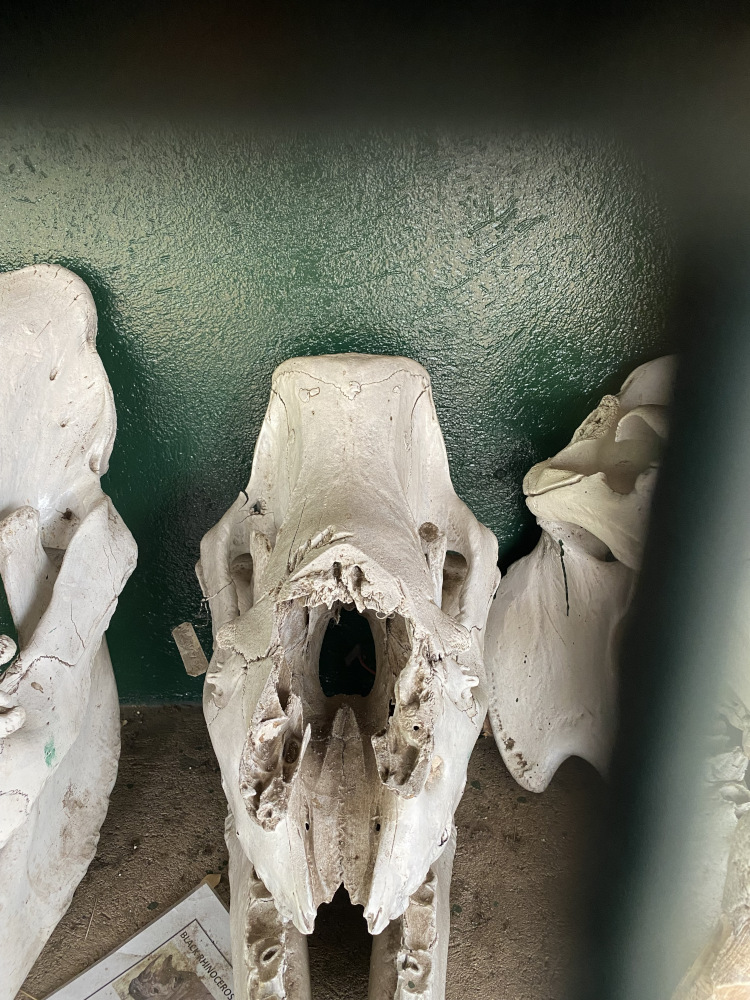
2. Killing for food: This is called subsistence poaching.
In many rural communities in South Africa and Zimbabwe, wildlife is hunted for what is called “bushmeat.”
This is due to food insecurity or economic desperation.
While some of this hunting is legal, the demand for wildlife as a food source can also lead to illegal poaching, depleting animal populations and threatening biodiversity.
3. Capturing live animals: Another form of poaching involves capturing wild animals alive for the illegal “pet” trade or for use in circuses and tourist attractions.
This is especially prevalent for species such as parrots, monkeys, and reptiles.
Animals are often taken from their natural habitats and transported under horrific conditions, causing immense suffering – and death.
Taking care of these animals is not easy. Surgeons deal with a specific type of fractures (“pathological fractures”) due to a lack of calcium and poor feeding habits.
Why is poaching so enticing?
The reasons behind poaching are complex and vary by region.
Some of the key drivers include:
- Poverty and economic incentives: Many poachers come from poor communities, where poaching is seen as a quick way to make money. Rhino horns, as mentioned, can fetch astronomical prices on the black market.
- Demand for animal products: There is demand for animal products like ivory, rhino horn, and skins, especially in international markets. These products are often viewed as status symbols, driving illegal trade.
- Weak law enforcement: In some areas, the lack of effective law enforcement and the corruption within local governments makes it easier for poachers to operate with little fear of consequences. These are gigantic and ruthless territories that are difficult to protect.
Which animals are affected by poaching?
The most commonly poached animals in South Africa and Zimbabwe include:
- Rhinos: Both white and black rhinos are heavily targeted for their horns. Poaching has decimated rhino populations in both countries.
- Elephants: Elephants are poached for their ivory tusks, a practice that has caused a dramatic decline in elephant numbers in Southern Africa.
- Big cats: Lions and leopards are also poached, primarily for their pelts, claws, and teeth, and sometimes due to conflict with farmers.
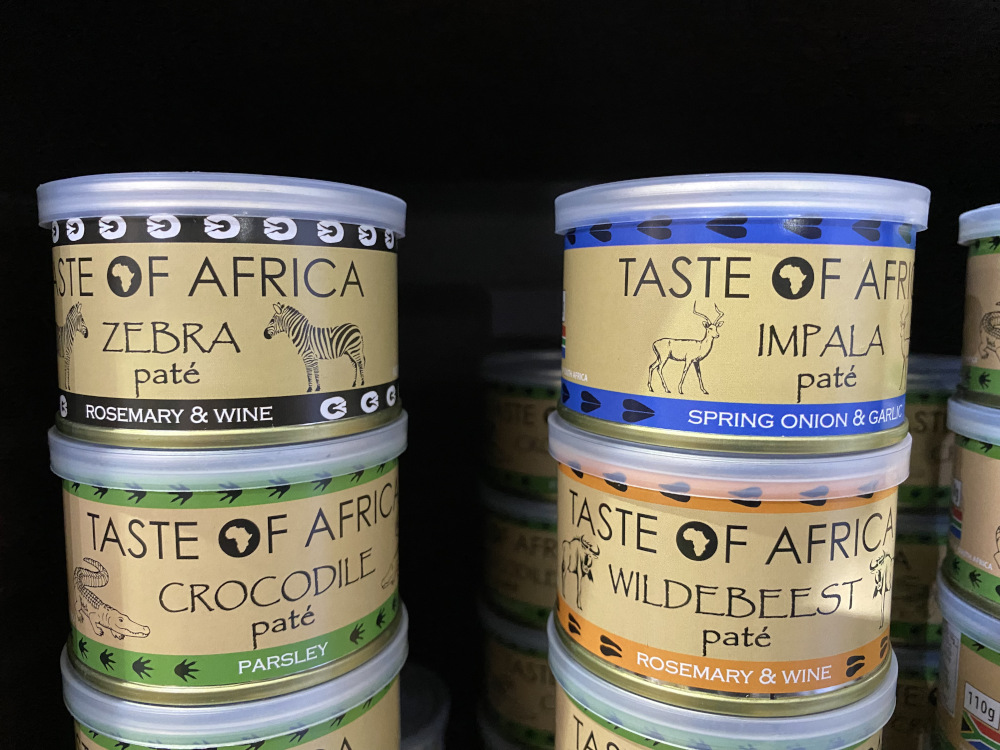
- Antelopes and other mammals: Species like kudu, impala, and wildebeest are sometimes poached for meat, especially in rural areas, though they are also targeted for their horns. And they can be found in supermarkets…
What are the consequences of poaching on animal populations?
The consequences of poaching are severe.
In South Africa, the rhino population has dropped by more than 70% in the past decade, due to poaching.
Similarly, elephant numbers have been severely impacted, in South Africa and Zimbabwe, where the illegal ivory trade continues to thrive.
The loss of these species not only affects the ecosystems they inhabit, but also threatens the economic stability of local communities that rely on tourism.
Without rhinos and elephants, many national parks lose their appeal to international tourists, which can have devastating economic consequences.
That’s the cruel irony of the situation: some communities kill animals for short-term gains – to survive – without seeing the long-term consequences.
How does poaching happen?
Poaching is a highly organized crime in many cases.
Often, poachers are part of well-established organizations that use sophisticated methods to track, hunt, kill, and transport animals.
Here’s a glimpse into how poaching operations typically unfold:
- The hunt: Poachers use guns, snares, or poison to kill animals.
- Processing: Once the animal is killed or captured, the horns, tusks, or other valuable parts are harvested. Nothing is as heart-wrenching as a dead, tusk-less elephant, or a dead, dehorned rhino, left behind to rot.
- Transportation: Animal parts are often smuggled across borders or shipped internationally to reach black market buyers. This illegal trade is typically carried out by criminal networks.
What is being done to fight poaching?
Both South Africa and Zimbabwe have taken significant steps to combat poaching, but there is still much work to be done:
1. Anti-poaching units: National parks and reserves employ anti-poaching teams that work tirelessly to protect wildlife. These units often include armed rangers who patrol vast areas and confront poachers directly.
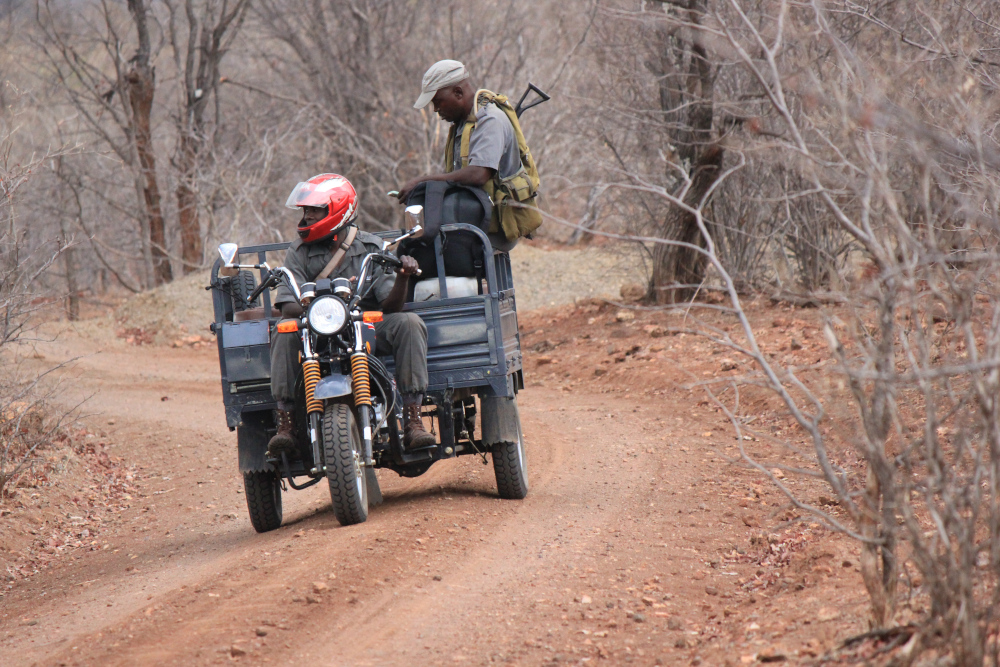
2. Technology and surveillance: Advancements in technology, such as drones and satellite monitoring, have enabled conservationists to track animal movements and detect poaching activity in real-time.
3. International cooperation: Countries, Non-Governmental Organizations (NGOs), and international organizations are working together to curb the illegal wildlife trade. This includes sharing intelligence, conducting joint operations, and strengthening laws related to wildlife protection.
4. Community engagement: Some efforts are focused on educating local communities and providing alternative livelihoods to reduce the reliance on poaching. Programs aimed at improving local food security and economic opportunities are promoted to create sustainable, long-term solutions.
What can animal lovers do?
You don’t have to be in South Africa or Zimbabwe to make a difference.
Here are a few ways you can help:
- Donate to anti-poaching organizations: Support groups like the World Wildlife Fund (WWF), African Wildlife Foundation, or Rhino Rescue to fund efforts against poaching.
- Raise awareness: Help me spread the word. Please share this blog with other animal lovers. Tell them about the effects of poaching and the importance of conservation. The more people know, the more pressure can be placed on governments and corporations to act.
- Advocate for stronger laws: Get involved in campaigns advocating for stronger anti-poaching laws and stricter enforcement of wildlife protection policies.
- Be a conscious consumer: Never purchase products made from ivory, rhino horn, or any animal body parts for that matter. Supporting sustainable and ethical businesses helps combat the demand for poached wildlife.
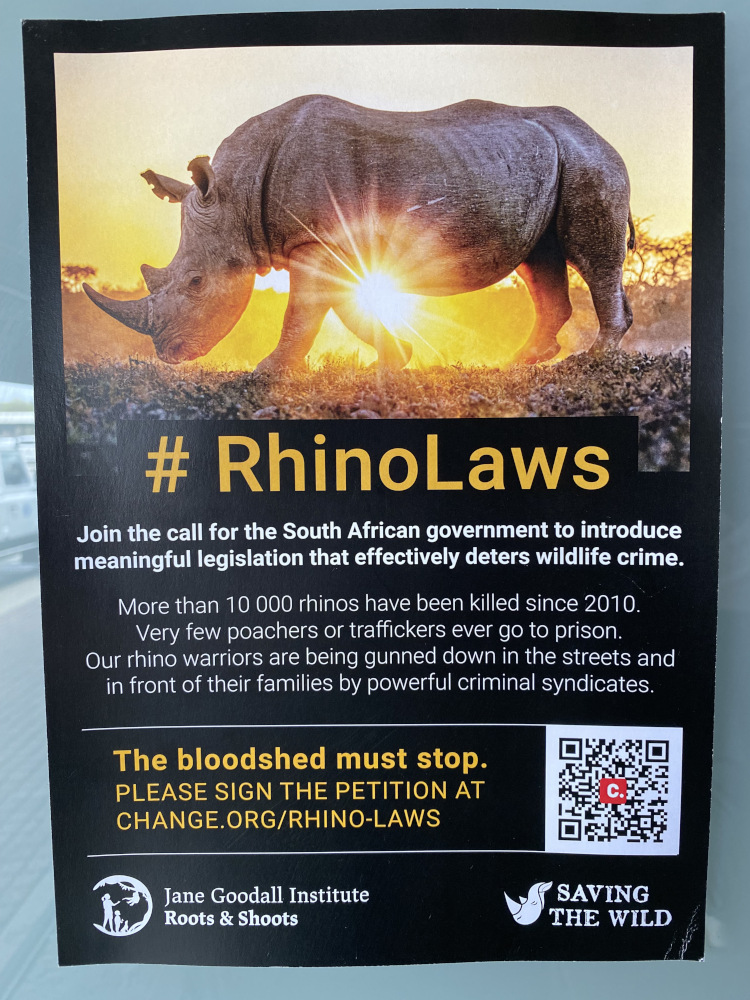
Poaching is a complex and heartbreaking issue, but it is one we can all help solve.
By raising awareness, supporting anti-poaching initiatives, and making ethical choices, we can help protect the incredible wildlife of South Africa and Zimbabwe.
The battle against poaching is far from over, but with collective action, we can ensure that these iconic species do not disappear from our planet forever.
We can’t help your rhino, but if you would like to learn how we can help your cat or dog with safe surgery and anesthesia, please contact us through www.DrPhilZeltzman.com
Never miss a blog by subscribing here: www.DrPhilZeltzman.com/blog
Phil Zeltzman, DVM, DACVS, CVJ, Fear Free Certified
Dr. Phil Zeltzman is a traveling veterinary surgeon in Pennsylvania & New Jersey. An award-winning author, he loves to share his adventures in practice along with information about vet medicine and surgery that can really help your pets. Dr. Zeltzman specializes in orthopedic, neurologic, cancer, and soft tissue surgeries for dogs, cats, and small exotics. By working with local family vets, he offers the best surgical care, safest anesthesia, and utmost pain management to all his patients. Sign up to get an email when he updates his blog, and follow him on Facebook, too!
Eye to Eye with Royalty
| I was very fortunate to recently visit South Africa and Zimbabwe after a veterinary conference. Since 100% of the pet owners we meet are animal lovers, I thought I would share some information and pictures about his incredible trip. |
When Malema swiftly moved from his tracker’s seat, on top of the hood of the jeep, to the safety of the passenger seat, we knew that danger was near.
The group went quiet in anticipation, staring at the road ahead.
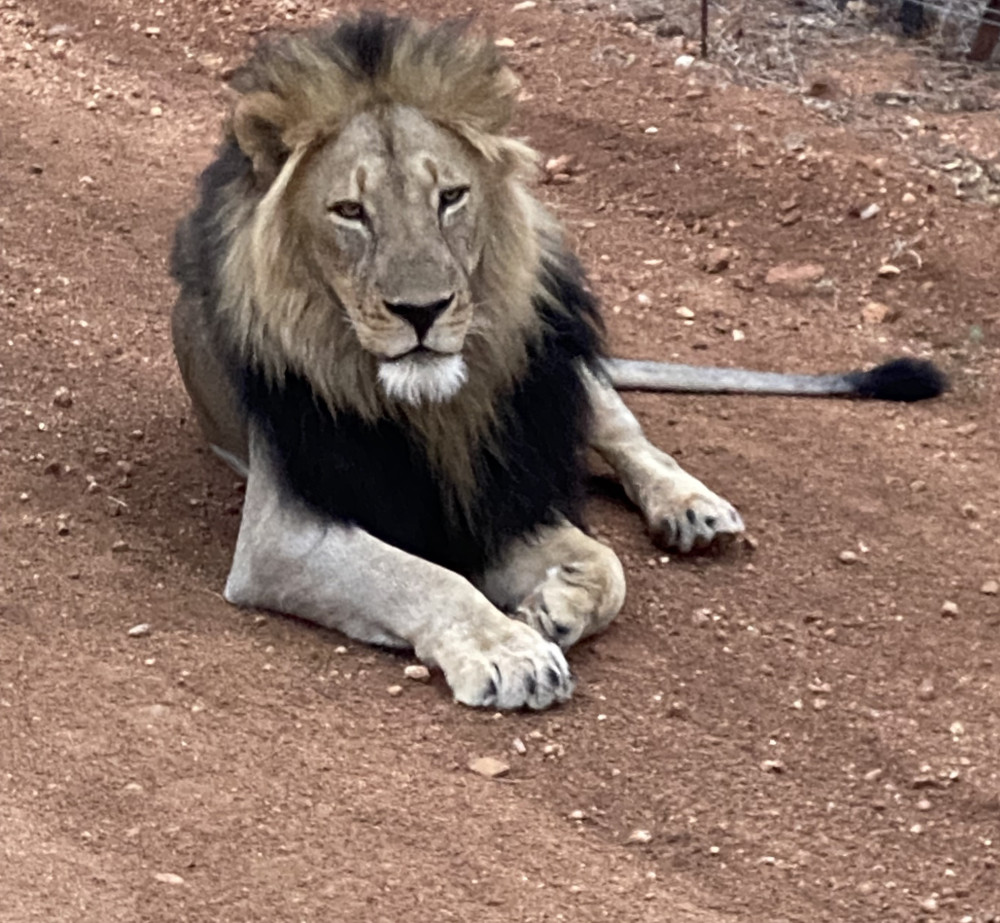
Suddenly, two majestic male lions appeared, lounging in the middle of the road!
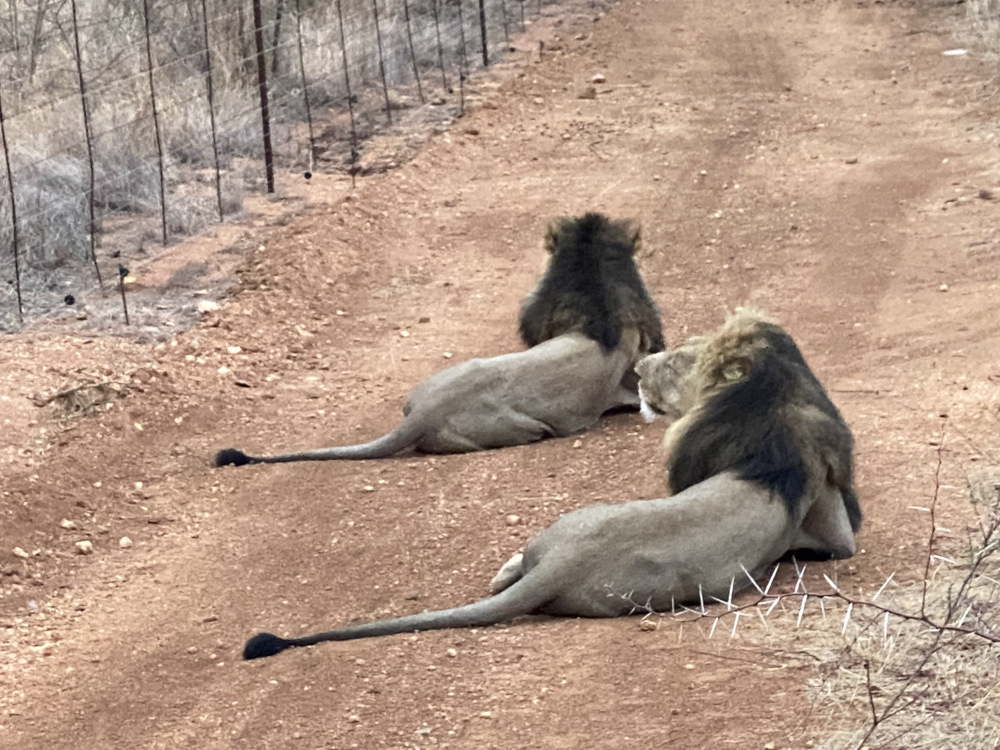
We held our breath, in complete disbelief. After all, this was our very first outing!
The lions just sat there, pretending to ignore us.
At one point, one rolled on his back, like a household cat.
700 pictures later, the lions decided they were bored of being the center of attention.
They got up, and peacefully walked around the jeep, one on each side, staring at us with curiosity.
They moved with effortless grace, with a silent, powerful stride. The lion on the right locked eyes with me. It lasted a second, but I will never forget it. He was within 3 feet of me.
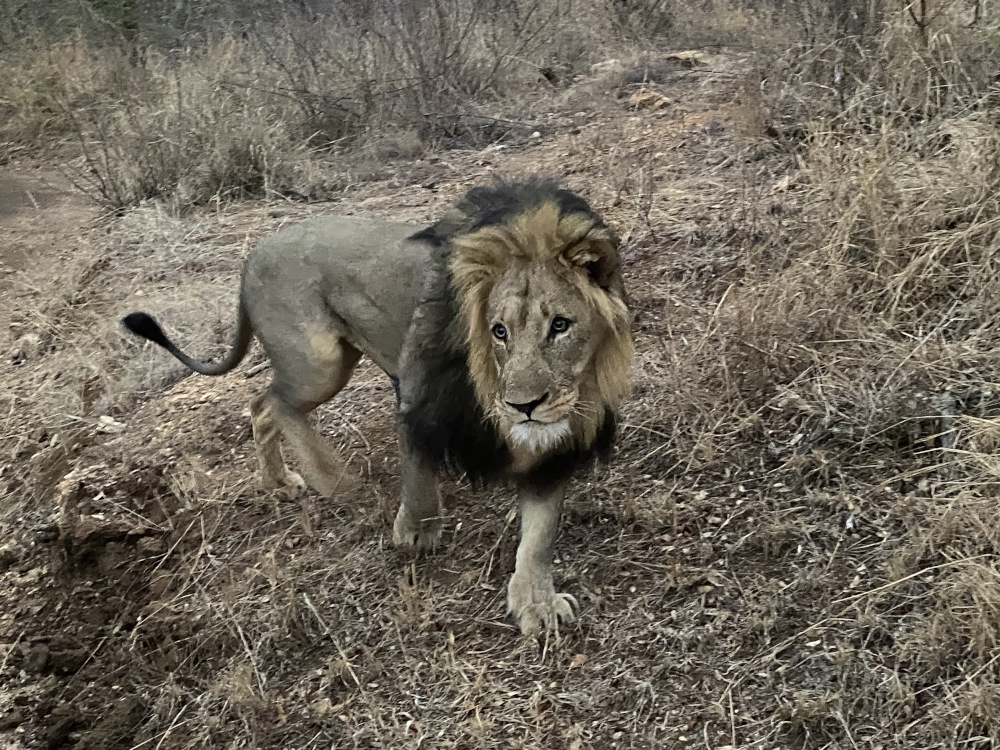
After a few moments, the lions disappeared back into the bush.
We sat in stunned silence, hearts pounding, trying to process what just happened.
It was an unforgettable encounter.
It was a reminder of the wild’s power and the incredible privilege of witnessing such beauty.
We can’t help your lion, but if you would like to learn how we can help your cat or your dog with safe surgery and anesthesia, please contact us through www.DrPhilZeltzman.com
Never miss a blog by subscribing here: www.DrPhilZeltzman.com/blog
Phil Zeltzman, DVM, DACVS, CVJ, Fear Free Certified
Dr. Phil Zeltzman is a traveling veterinary surgeon in Pennsylvania & New Jersey. An award-winning author, he loves to share his adventures in practice along with information about vet medicine and surgery that can really help your pets. Dr. Zeltzman specializes in orthopedic, neurologic, cancer, and soft tissue surgeries for dogs, cats, and small exotics. By working with local family vets, he offers the best surgical care, safest anesthesia, and utmost pain management to all his patients. Sign up to get an email when he updates his blog, and follow him on Facebook, too!