



Dr. Phil Zeltzman’s Blog
A day in the life of an exotic animal veterinarian
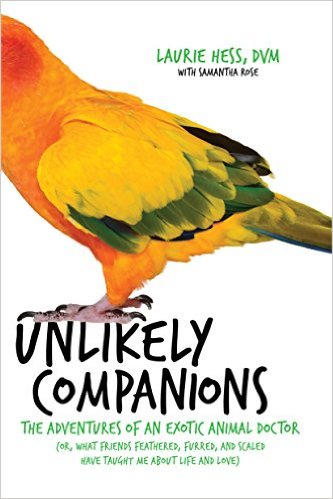 Have you ever had a a parrot for a pet – or even a pig?
Dr. Laurie Hess knows that our exotic or unusual pets are just as important to us as our cats and dogs. She’s board-certified by the American Board of Veterinary Practitioners in avian medicine, past president of the Association of Avian Veterinarians, and a member of both the Association of Exotic Mammal Veterinarians and the Association of Reptilian and Amphibian Veterinarians.
She’s written a book that will bring the reader into her world, sharing stories of her patients (and the clients who come with them!) and reminding us that, whether they have fur, feathers, or scales, our pets provide us with endless happiness.
Unlikely Companions will open a window into the practice of an exotic animal veterinarian, and would make a perfect gift for your animal-loving friends and family members.
Click here or on the image at the right to share the joy.
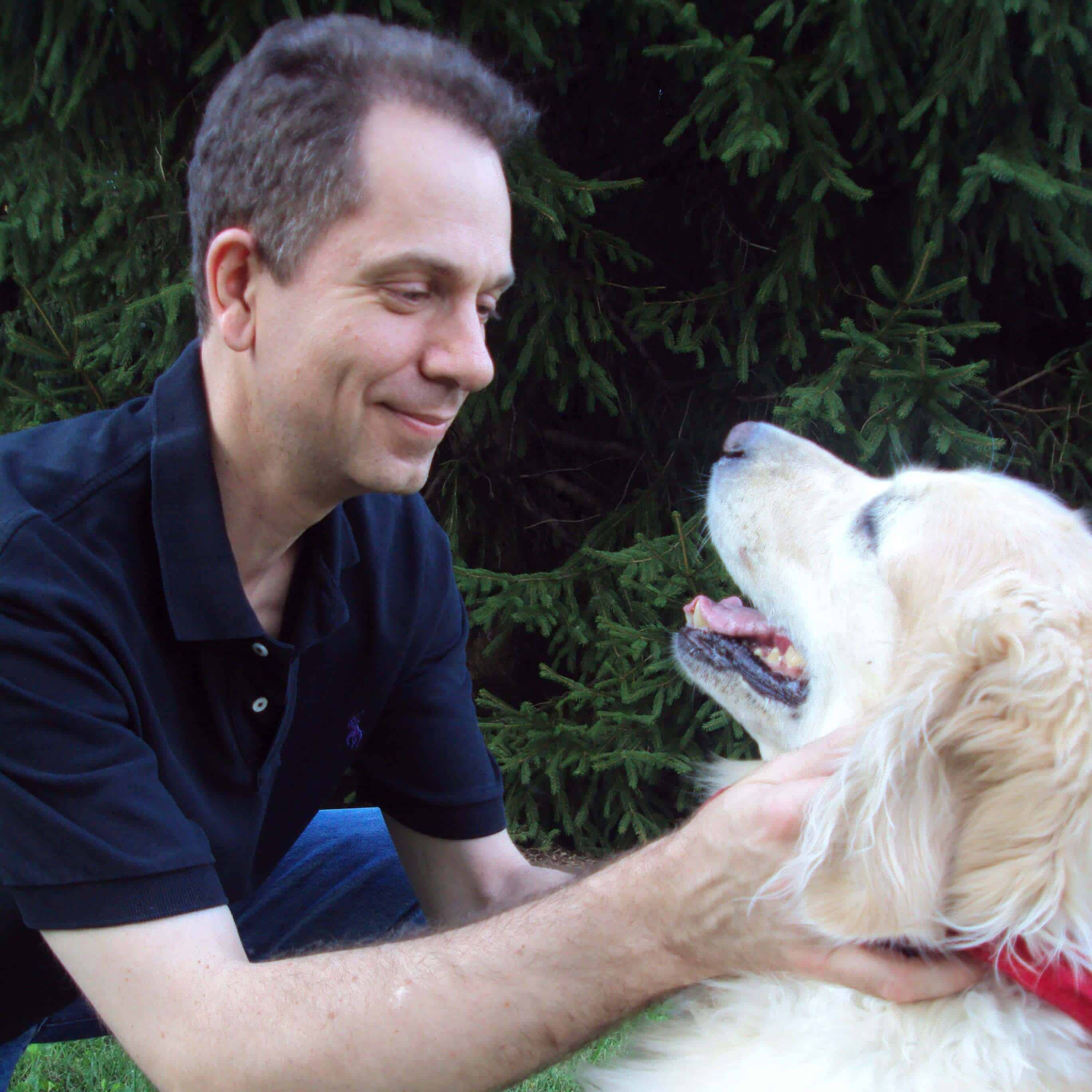
Dr. Phil Zeltzman is a traveling veterinary surgeon in Pennsylvania & New Jersey. An award-winning author, he loves to share his adventures in practice along with information about vet medicine and surgery that can really help your pets. Dr. Zeltzman specializes in orthopedic, neurologic, cancer, and soft tissue surgeries for dogs, cats, and small exotics. By working with local family vets, he offers the best surgical care, safest anesthesia, and utmost pain management to all his patients. Sign up to get an email when he updates his blog, and follow him on Facebook, too!
Rescued Dachshund serves as powerful reminder to spay your pets
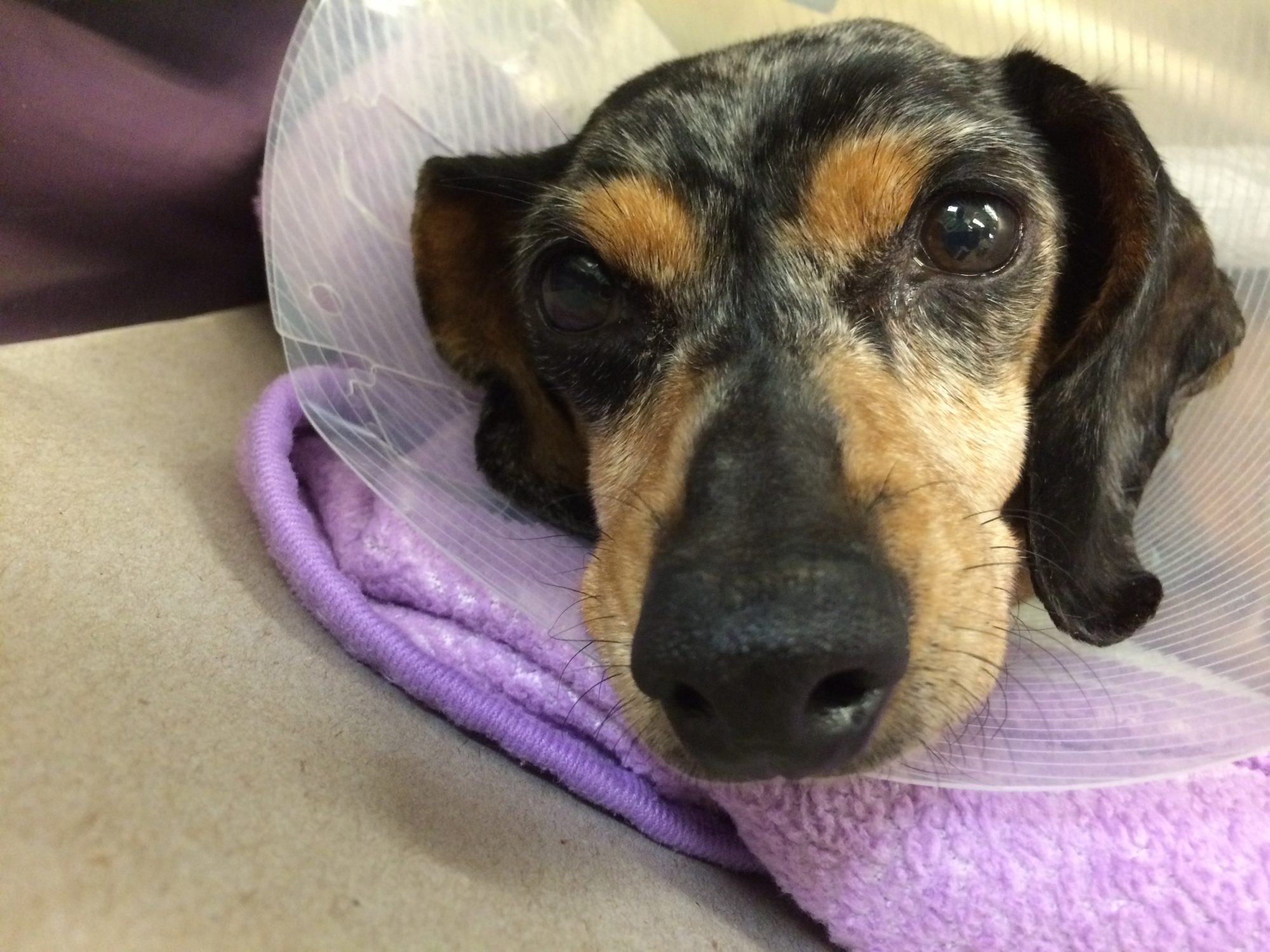 Angel was rescued after she was found running on the side of the road. An approximately 8-year-old Doxie, this sweet girl needed all the help she could get.
She was suffering with two large mammary masses – one with open draining wounds.
Because there was a 50-50 chance the masses were cancerous, there was a risk of spreading to the lung. We took chest X-rays before surgery. It didn’t show any spreading to the lungs, but it did show calcium deposits inside the tumors.
This surgery at Berks Animal Emergency & Referral Center was quite the challenge. Removing all the affected tissue required removal of the 2 masses and some healthy skin around it. In addition, in order to try to “get it all”, some of the muscles of her belly (her abs) were removed. She was also spayed during the procedure. The skin stitches were so tight, I was concerned that they would pull through the skin. To try to decrease that risk, a few special sutures, called stent sutures, were placed along the long incision. One week after surgery, the incision looked great and the stents were removed.
Unfortunately, the biopsy of the masses came back as low-grade cancer.
The only way to virtually eliminate the risk of breast cancer is to spay your female dog (or cat) before her first heat cycle.
Dogs with mammary tumors still should be spayed. It’s too late to prevent mammary tumors, but you can stop a life-threatening infection of the uterus called pyometra.
Angel is looking for a foster home or a furrever home to provide a comfortable place to recover and get the TLC she desperately deserves! Please contact Dachshund Rescue of Bucks County at www.doxierescue.com or (215) 736-3338 for more information.
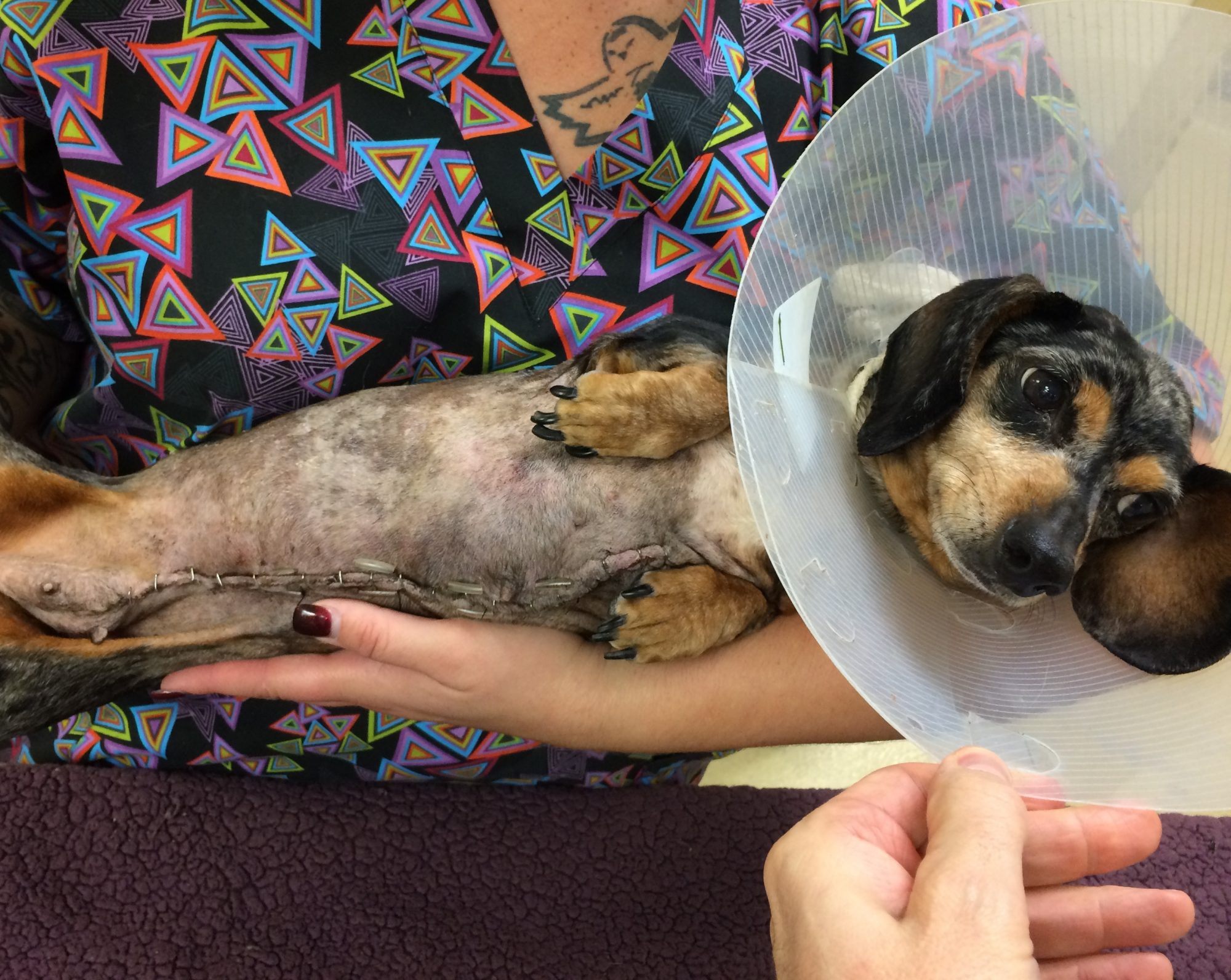
Angel is recovering nicely one week after surgery.
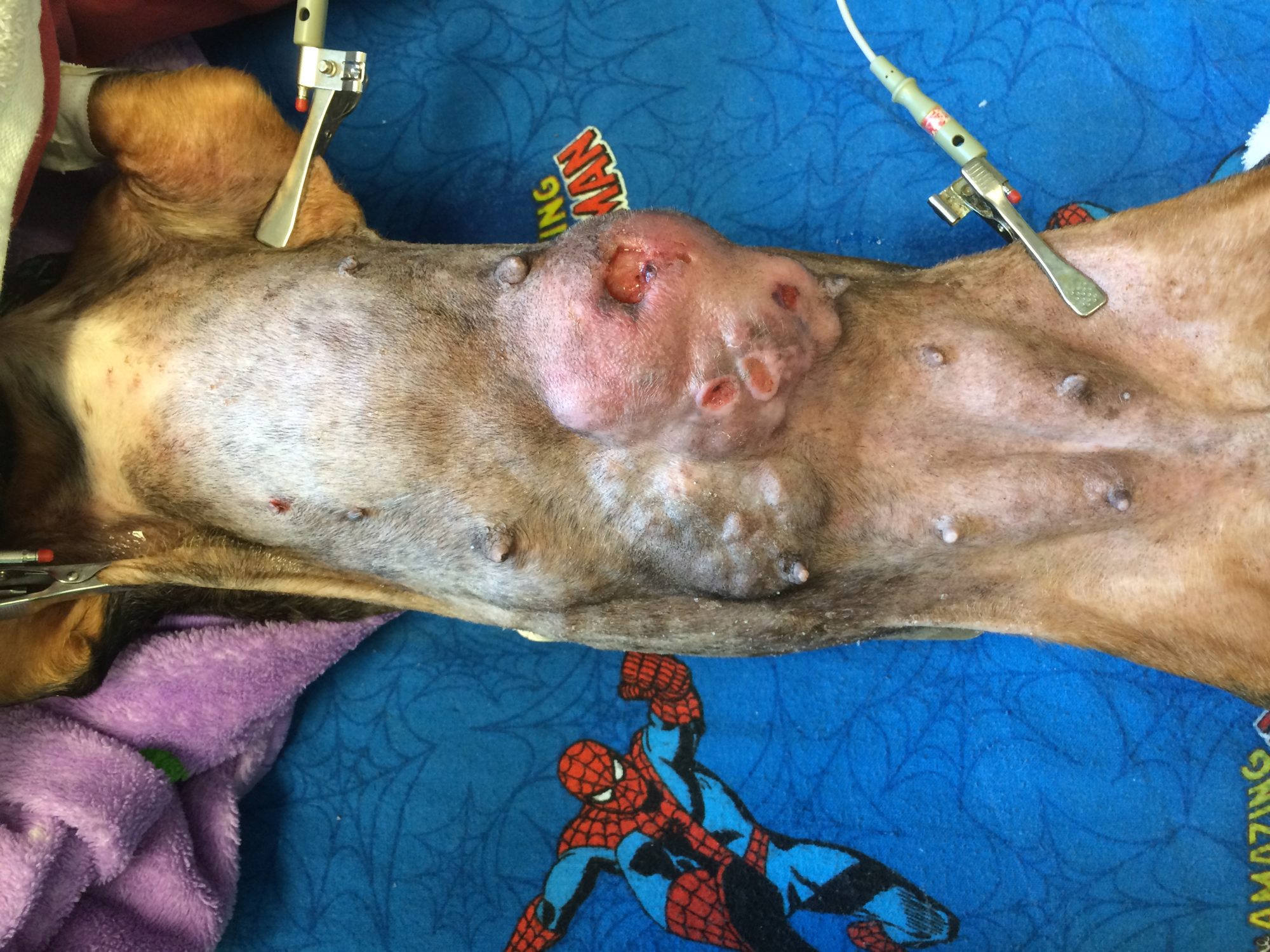 Angel’s mammary tumors before surgery. |
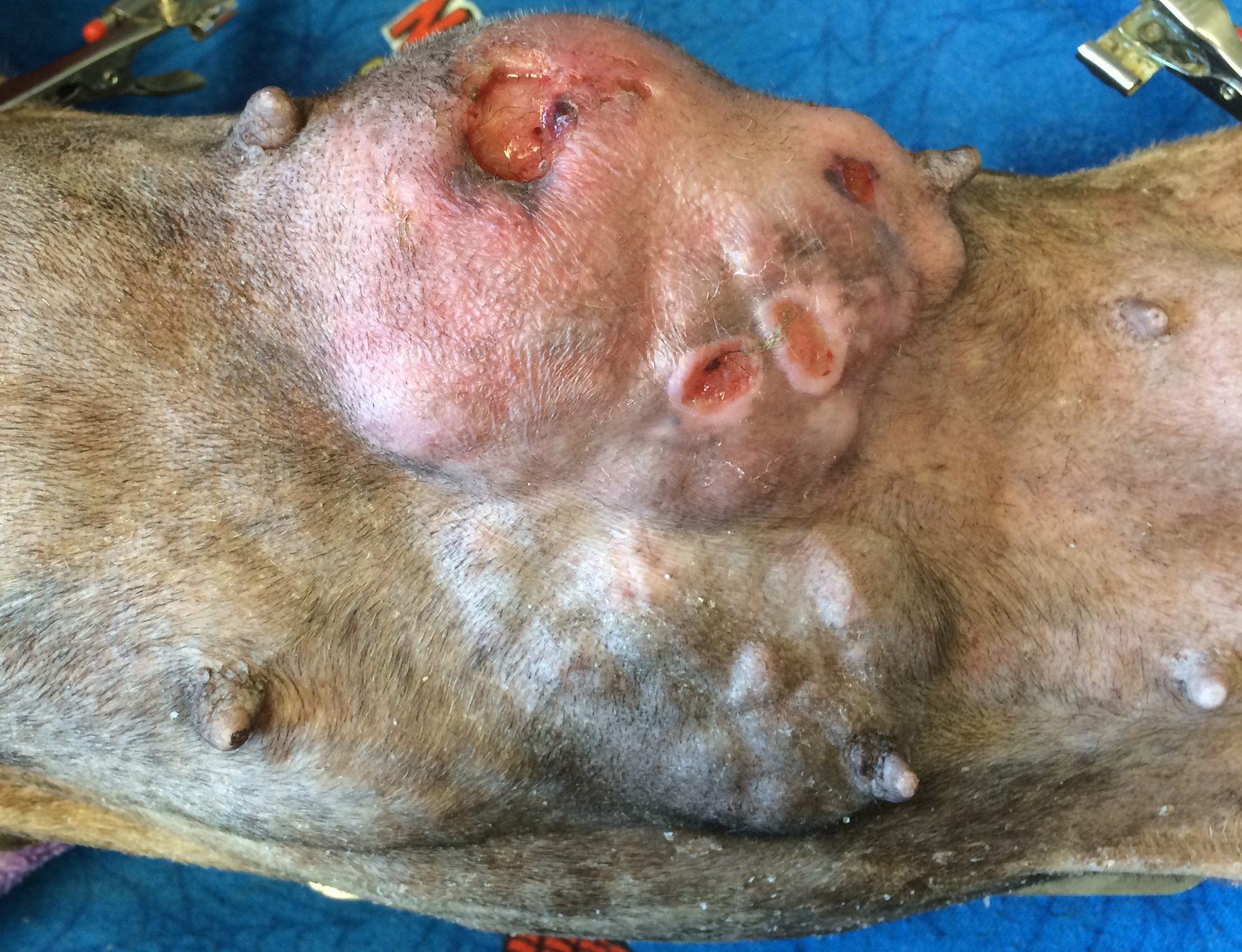 A close up of the mammary masses. |
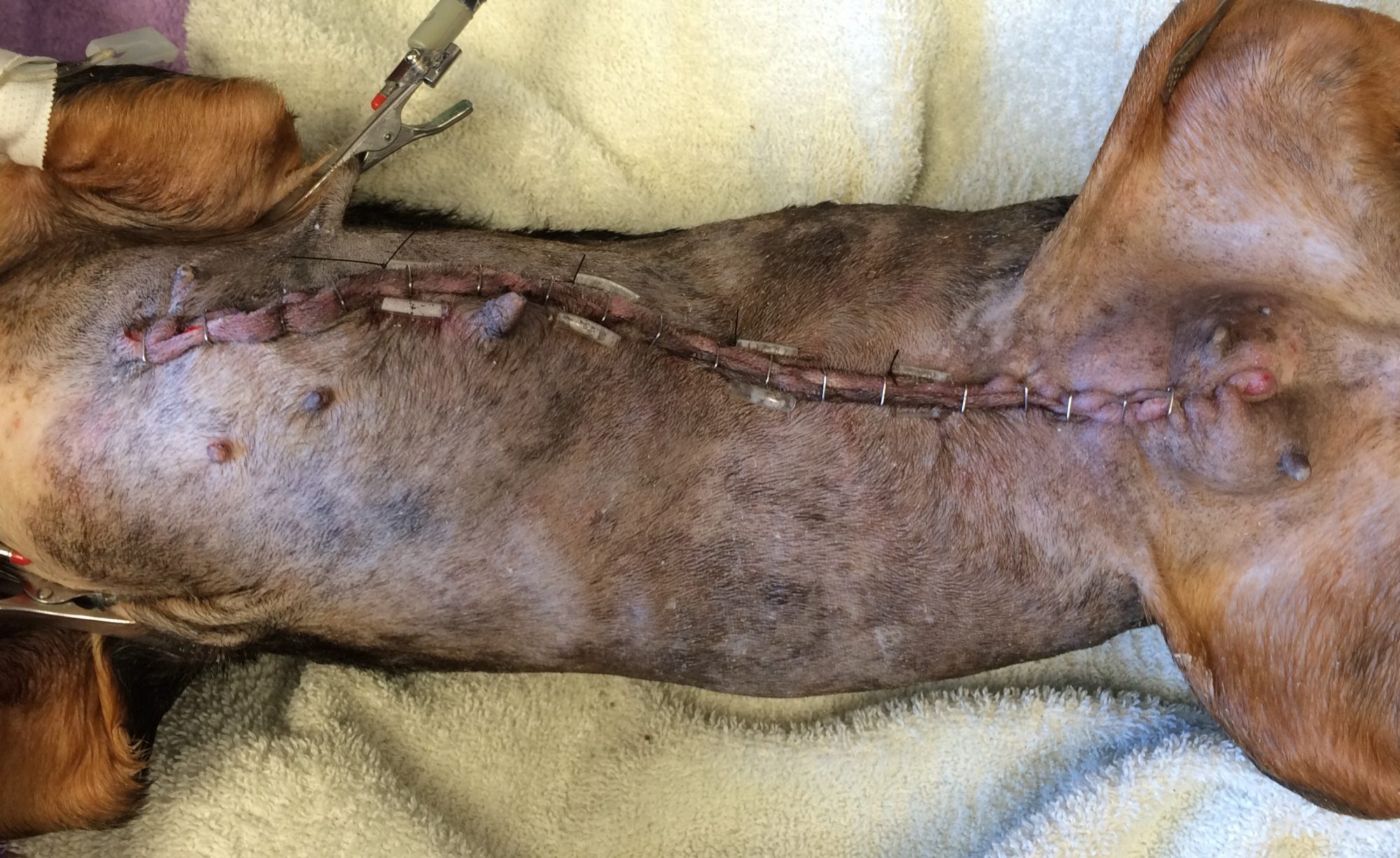 Angel’s surgery was complicated, and closing the incision was a challenge. |
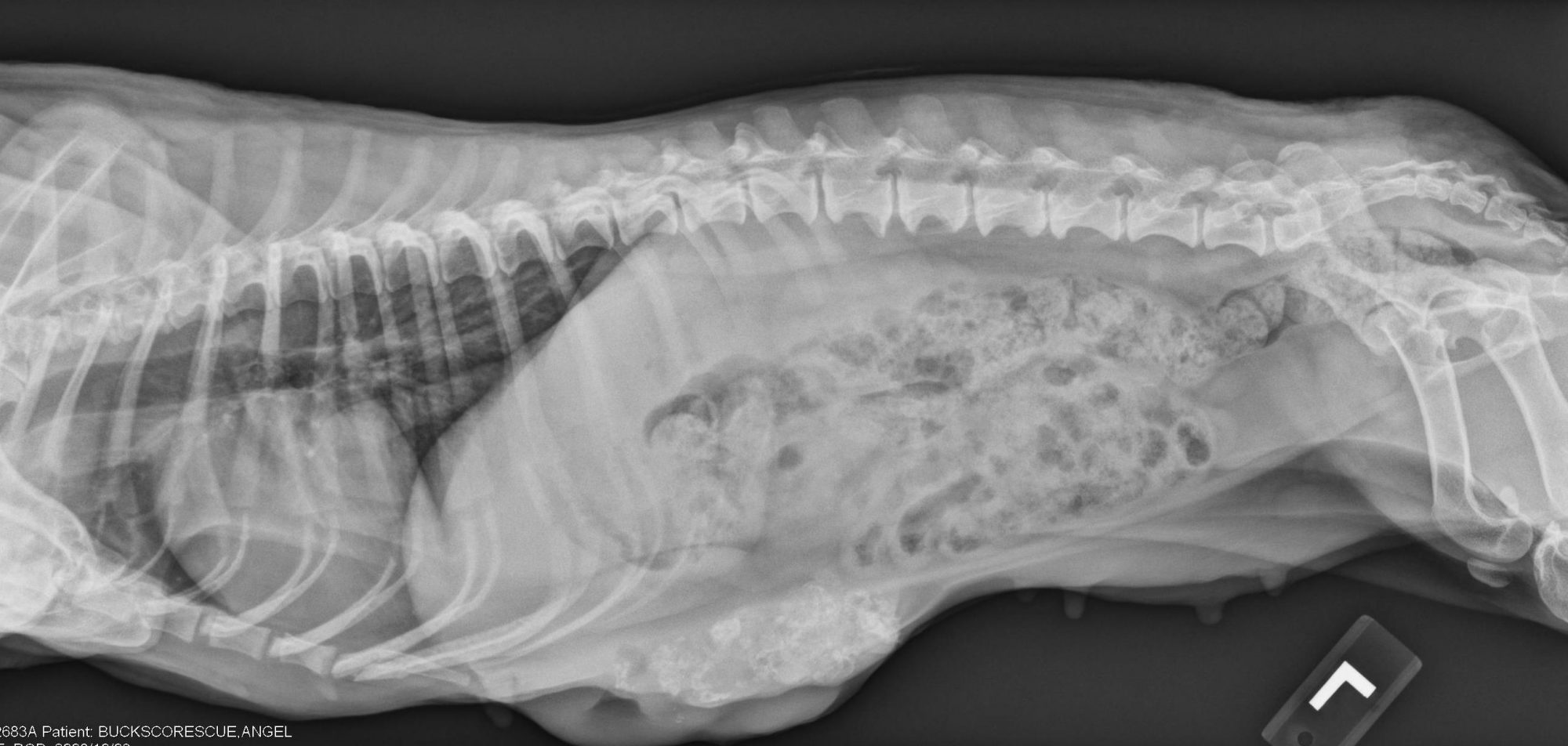 You can see calcium deposits in the X-ray. |
Dr. Phil Zeltzman is a traveling veterinary surgeon in Pennsylvania & New Jersey. An award-winning author, he loves to share his adventures in practice along with information about vet medicine and surgery that can really help your pets. Dr. Zeltzman specializes in orthopedic, neurologic, cancer, and soft tissue surgeries for dogs, cats, and small exotics. By working with local family vets, he offers the best surgical care, safest anesthesia, and utmost pain management to all his patients. Sign up to get an email when he updates his blog, and follow him on Facebook, too!
Long-suffering Cocker Spaniel gets surgical relief
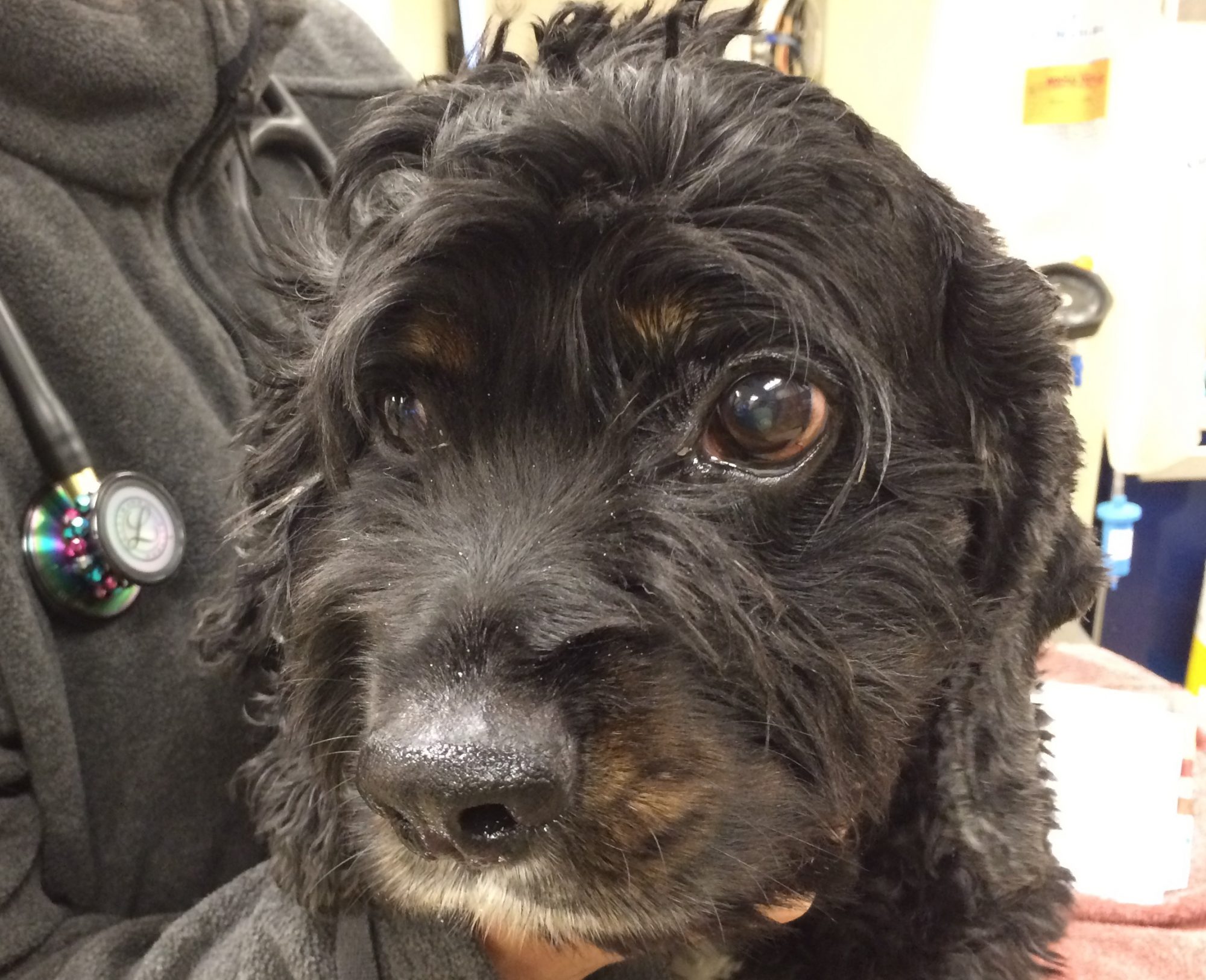 Pepper had a long history of ongoing and recurring ear infections. By the time I met Pepper, a nine-year-old Cocker, he had “end stage otitis.”
This means the ear canal was a stinky, painful, rock-hard mess.
Be glad I can’t share the smell with you!
Every conceivable treatment was tried, and in the end conservative options failed. The only good solution to help Pepper was a procedure called TECA, or Total Ear Canal Ablation.
Pepper’s owners felt that his left ear was worse, so I performed a left ear TECA.
I removed the the entire diseased and infected ear canal. The ear flap stays of course!
After 3 weeks, the surgery site healed very nicely and Pepper was doing great. Now he is ready for a TECA on the right side!
Surgery is a great option for dogs with repeated ear infections. Cocker Spaniels in particular have trouble with infections and can be helped by surgery.
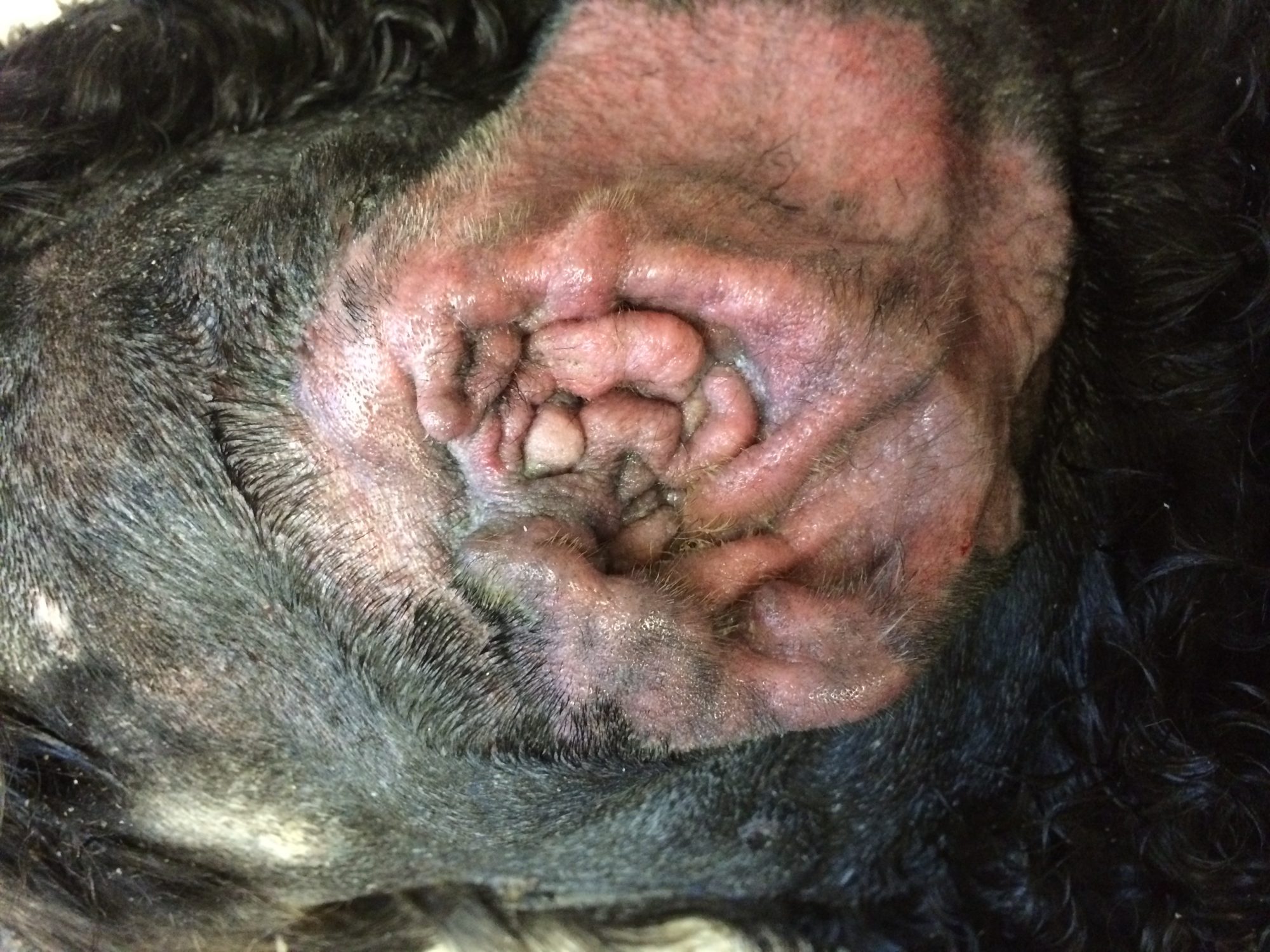 End stage otitis. |
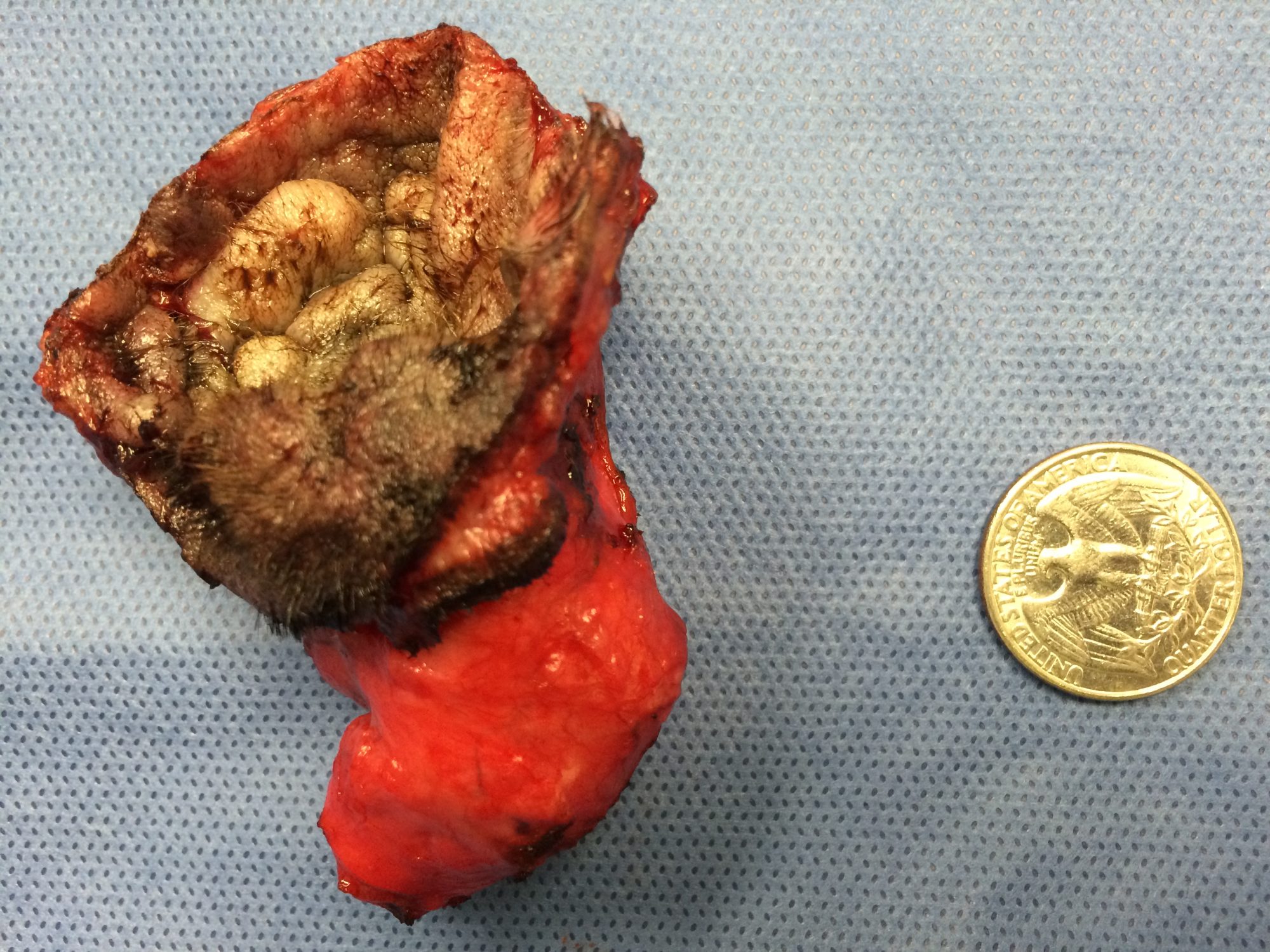 The ear canal after removal. |
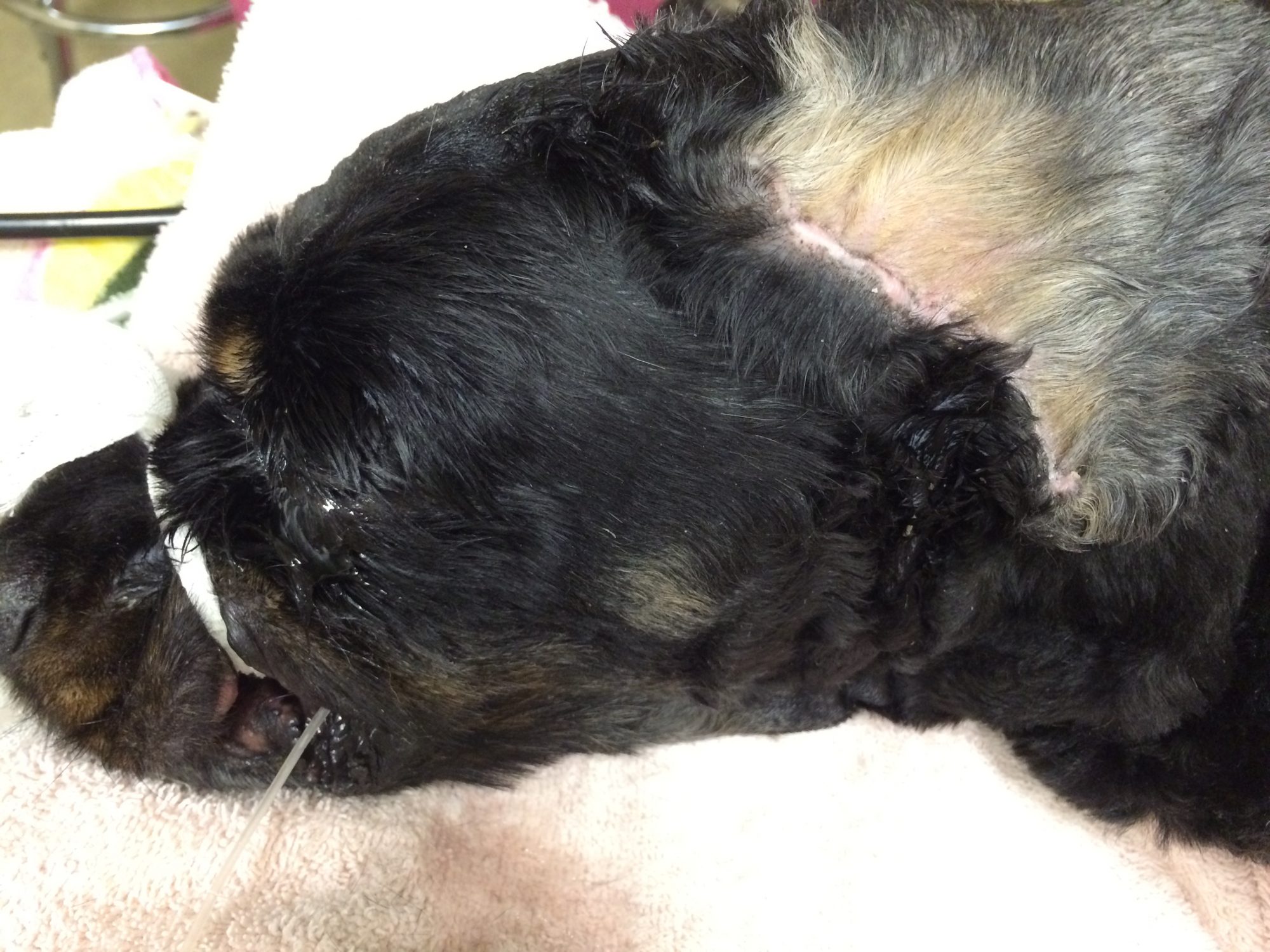 The left ear incision healed, and Pepper was ready for surgery on this right ear. |
Dr. Phil Zeltzman is a traveling veterinary surgeon in Pennsylvania & New Jersey. An award-winning author, he loves to share his adventures in practice along with information about vet medicine and surgery that can really help your pets. Dr. Zeltzman specializes in orthopedic, neurologic, cancer, and soft tissue surgeries for dogs, cats, and small exotics. By working with local family vets, he offers the best surgical care, safest anesthesia, and utmost pain management to all his patients. Sign up to get an email when he updates his blog, and follow him on Facebook, too!
Owners’ smart choice saves Boston Terrier from difficult surgery
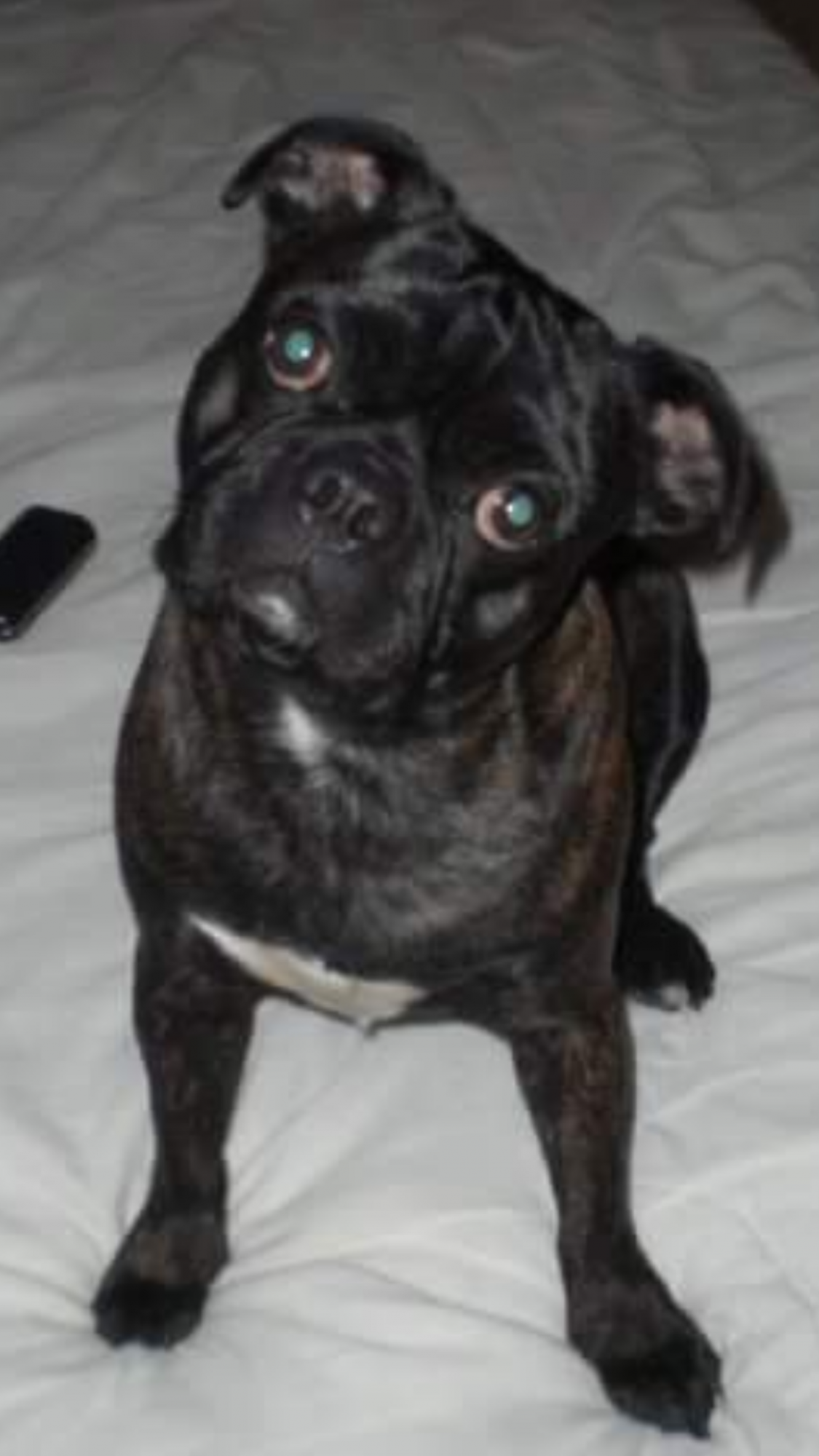 Bruiser is a nine-year-old Boston Terrier mix who was having some discomfort in his hind end. His owners took him to see his family vet. A rectal exam revealed a firm mass just below the anus, hidden under the skin. Surgery was recommended to remove and biopsy the mass.
This surgery can be a bit tricky. The mass needs to be removed entirely, within healthy tissue to “get it all” or have clean margins. Yet we can’t be overly aggressive! We need to preserve the anus and more importantly, the muscles around it, which are responsible for continence.
Surgery at Brodheadsville Veterinary Clinic went very well. Bruiser had to wear a plastic cone around his head for three weeks. He went home with pain medications and antibiotics. The mass was sent out for biopsy.
The biopsy came back a week later…benign! It was a perianal gland adenoma, a common tumor in this area.
Bruiser is lucky his owners decided to remove the mass while it was fairly small. Removing a larger mass would be much more invasive. Early detection and a good decision from Bruiser’s owners made the surgery and recovery much smoother for Bruiser!
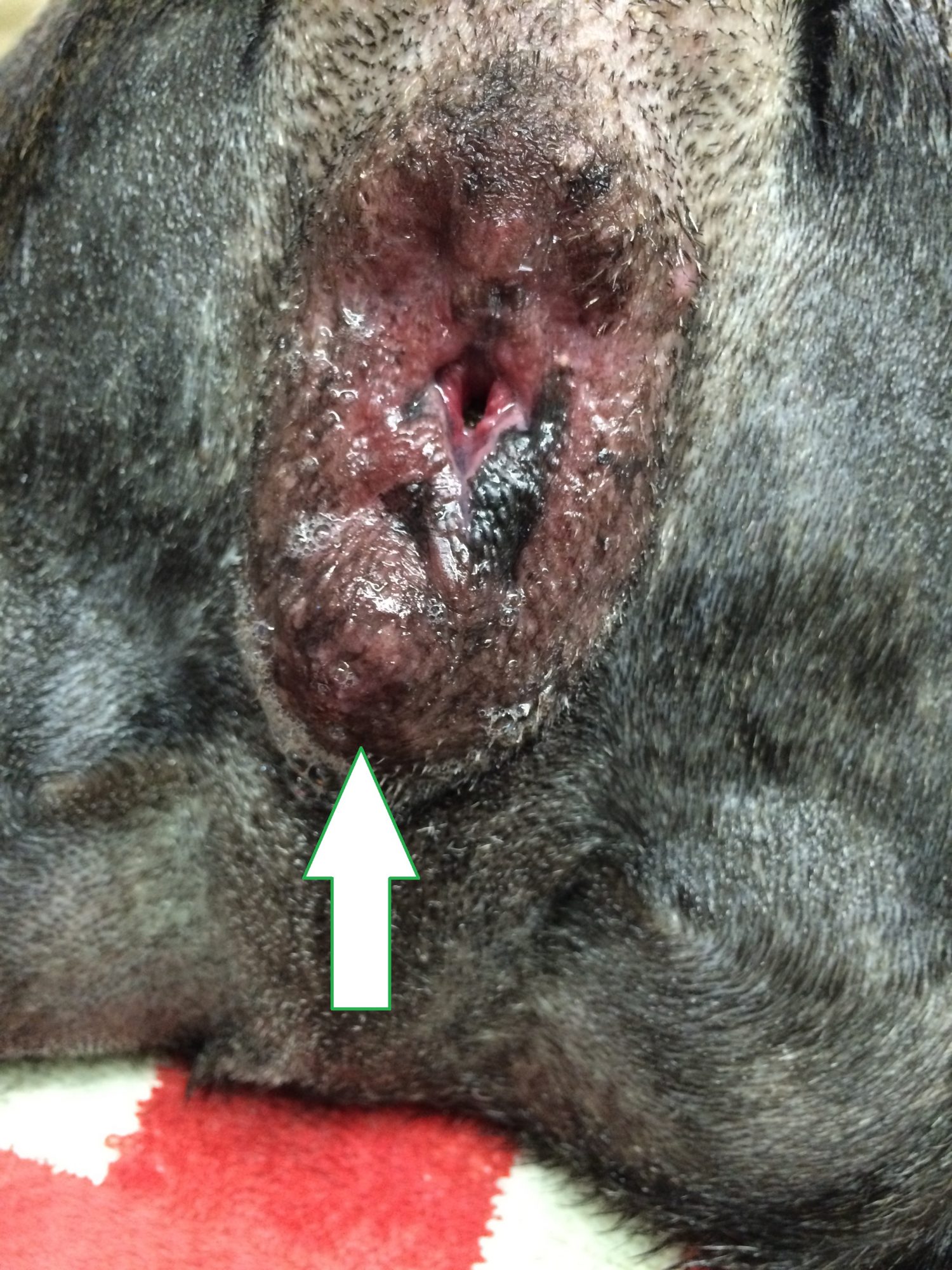
The arrow is pointing to a benign mass.
Dr. Phil Zeltzman is a traveling veterinary surgeon in Pennsylvania & New Jersey. An award-winning author, he loves to share his adventures in practice along with information about vet medicine and surgery that can really help your pets. Dr. Zeltzman specializes in orthopedic, neurologic, cancer, and soft tissue surgeries for dogs, cats, and small exotics. By working with local family vets, he offers the best surgical care, safest anesthesia, and utmost pain management to all his patients. Sign up to get an email when he updates his blog, and follow him on Facebook, too!
Outdoor cat lands in surgery after injury
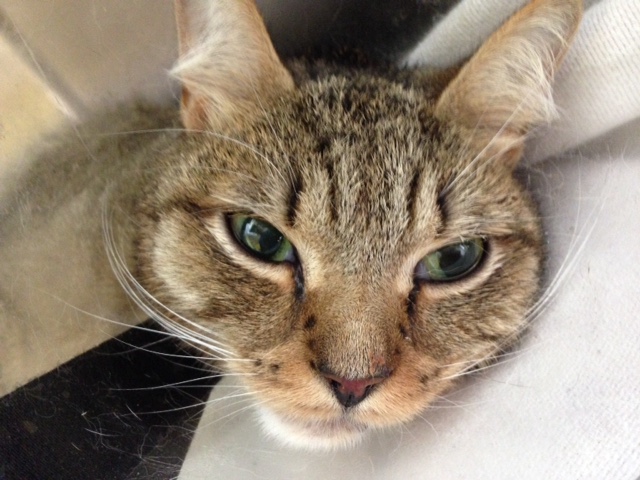 Frady’s owners brought her to the veterinarian with a broken tibia after she suffered an unknown trauma outdoors.
A two-year-old female kitty, Frady needed surgical intervention to fix the broken bone. After we started operating at Orefield Veterinary Clinic, we realized that the bone wasn’t fractured into two pieces – it was shattered!
I repaired the bone with a stainless steel plate, thirteen screws, and two wires. Then I reinforced the repair with a splint.
Outdoor cats are at increased risk for injuries or worse. Sadly, we don’t live in a cat friendly world. Cats get attacked, shot at, or hit by cars all the time. Don’t let your cat be a victim! Keeping your kitty indoors may save her life.
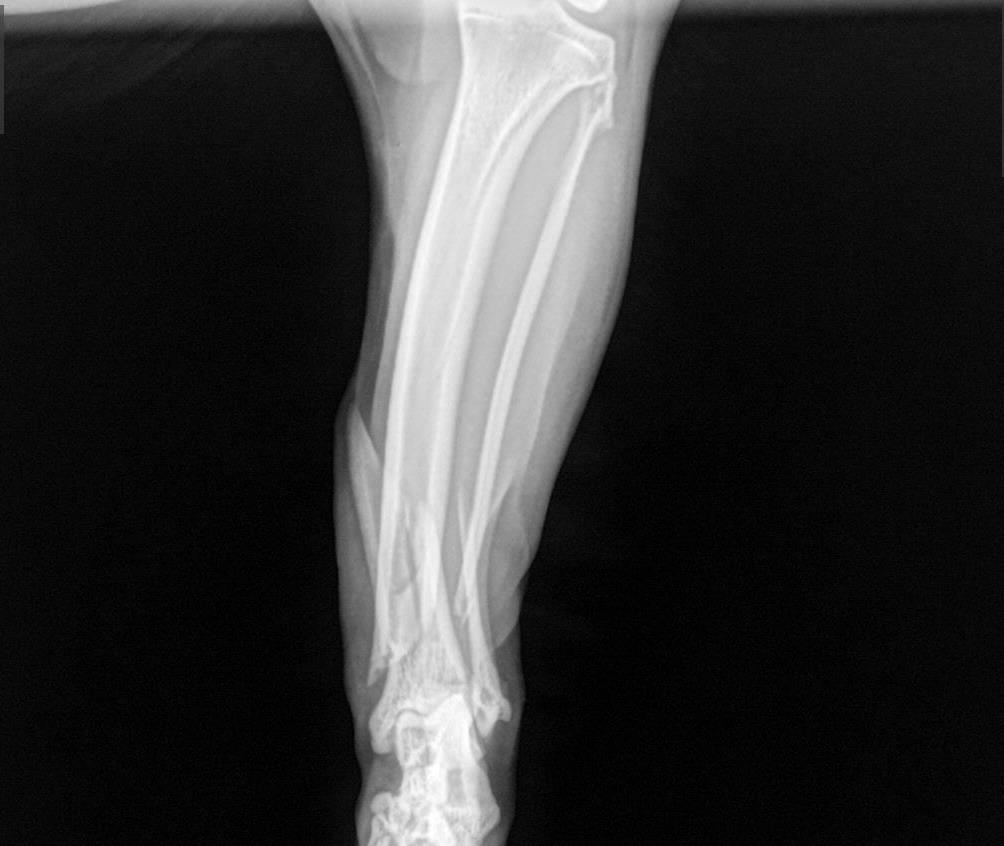 The shattered bone before being repaired. |
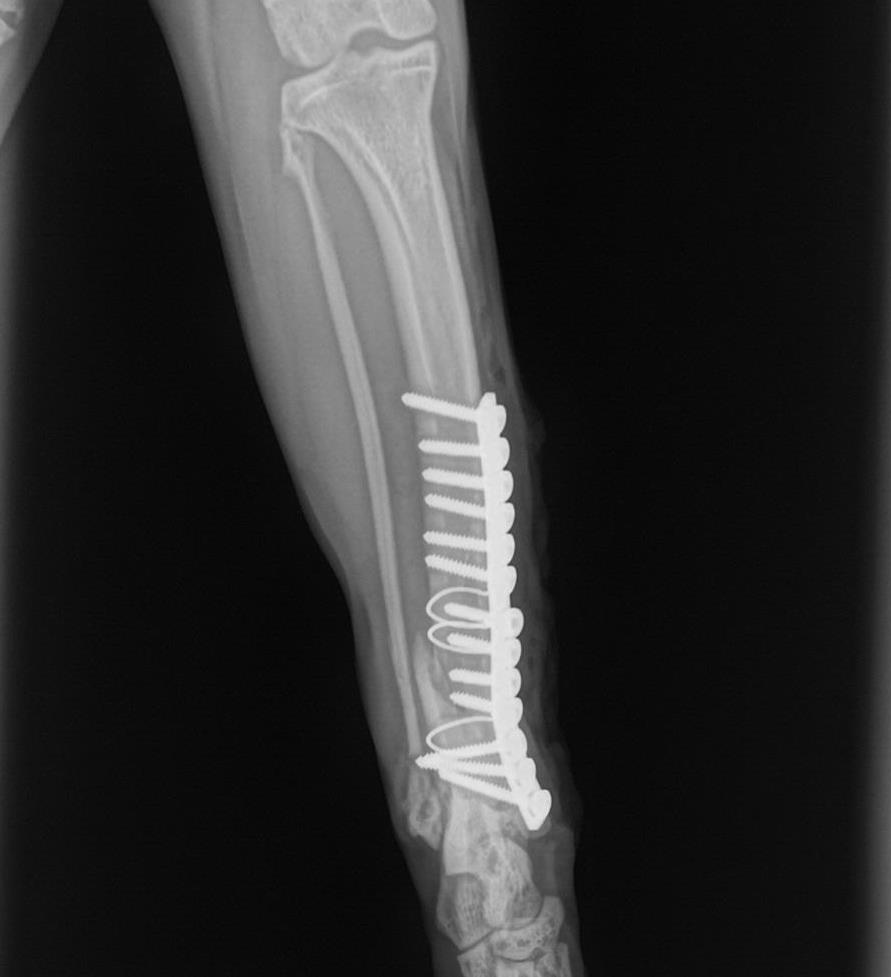 Here you can see the plate, screws, and wires used to repair the shattered bone. |
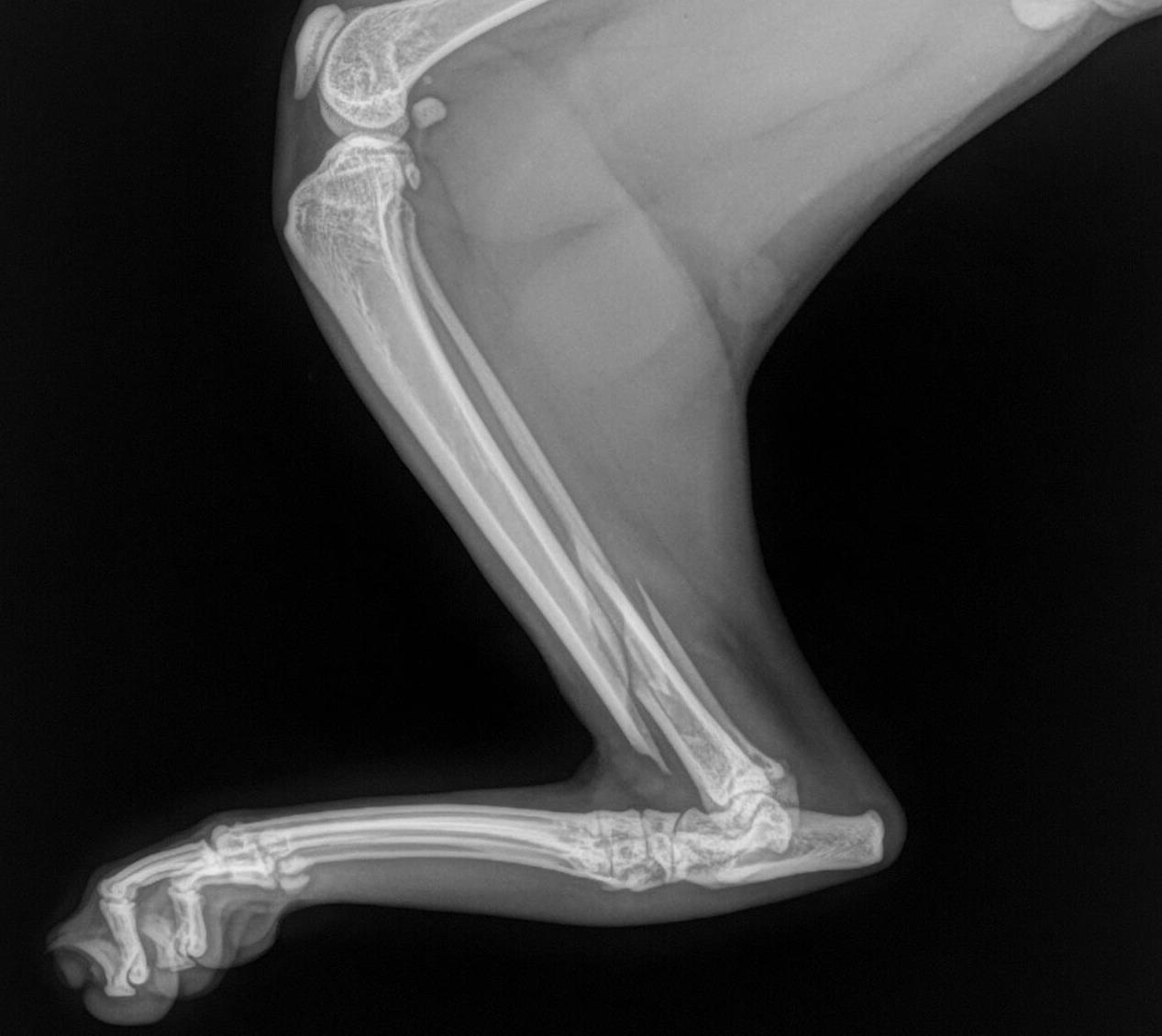 Another X-ray taken before the repair. |
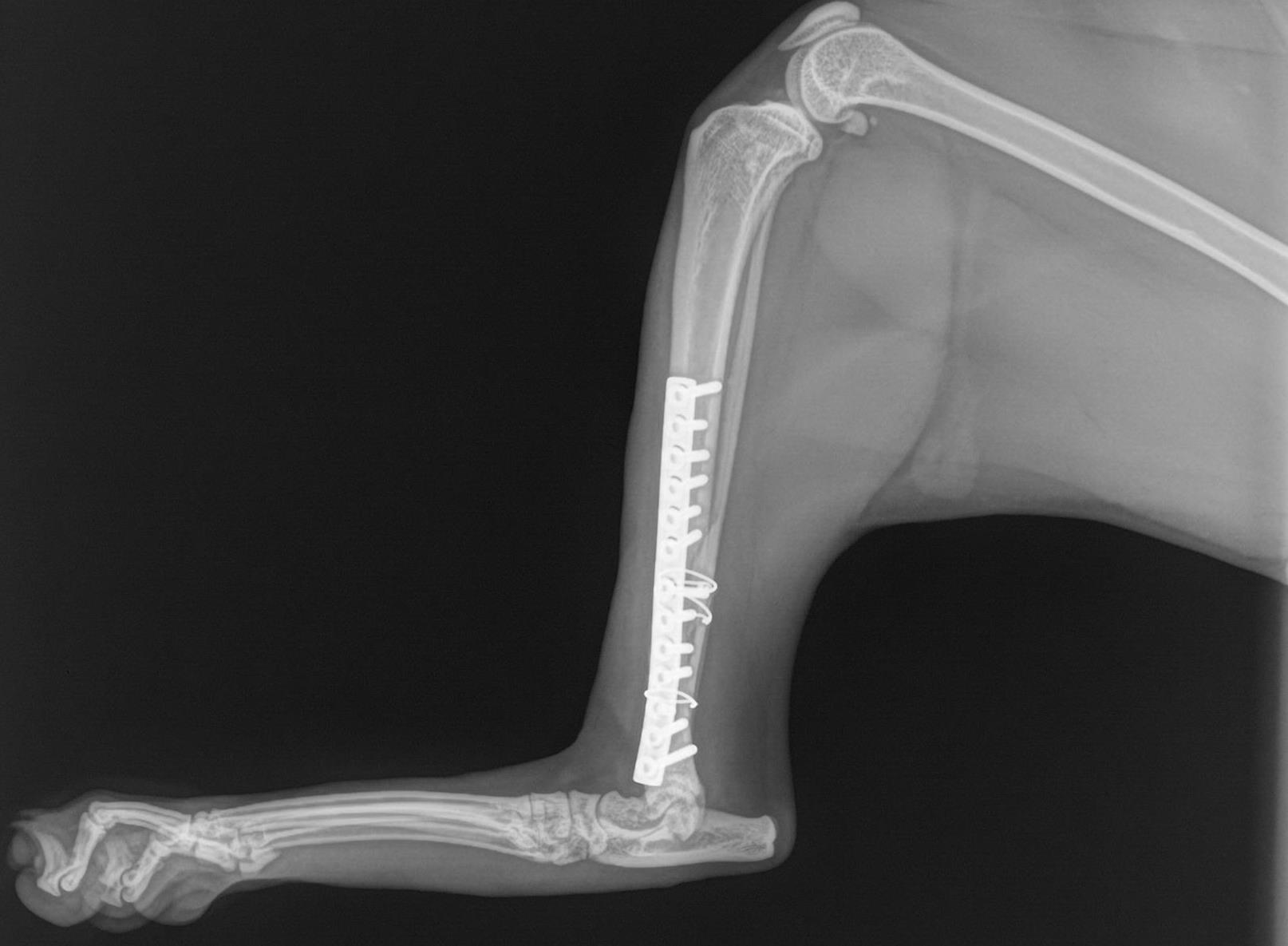 To fix the shattered tibia, I used thirteen screws, a plate, and two wires. |
Dr. Phil Zeltzman is a traveling veterinary surgeon in Pennsylvania & New Jersey. An award-winning author, he loves to share his adventures in practice along with information about vet medicine and surgery that can really help your pets. Dr. Zeltzman specializes in orthopedic, neurologic, cancer, and soft tissue surgeries for dogs, cats, and small exotics. By working with local family vets, he offers the best surgical care, safest anesthesia, and utmost pain management to all his patients. Sign up to get an email when he updates his blog, and follow him on Facebook, too!